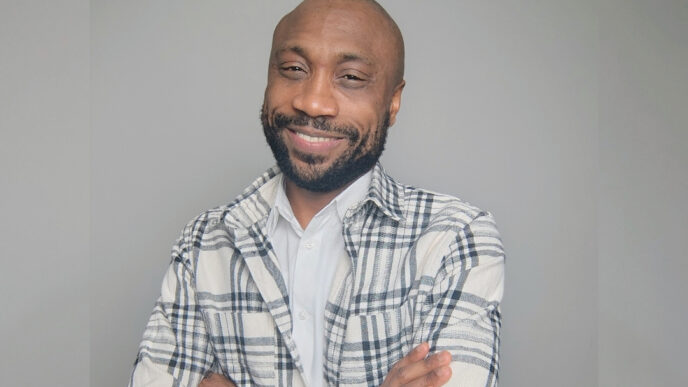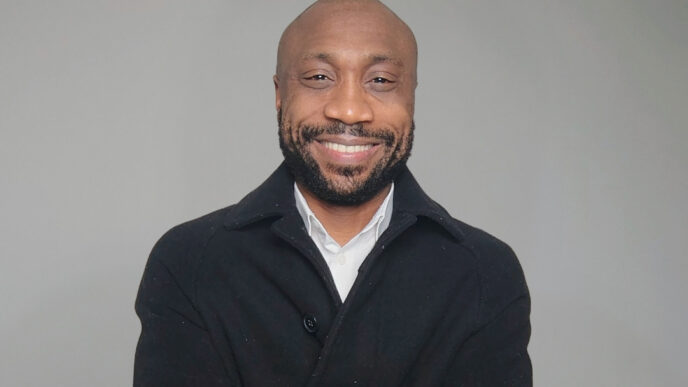
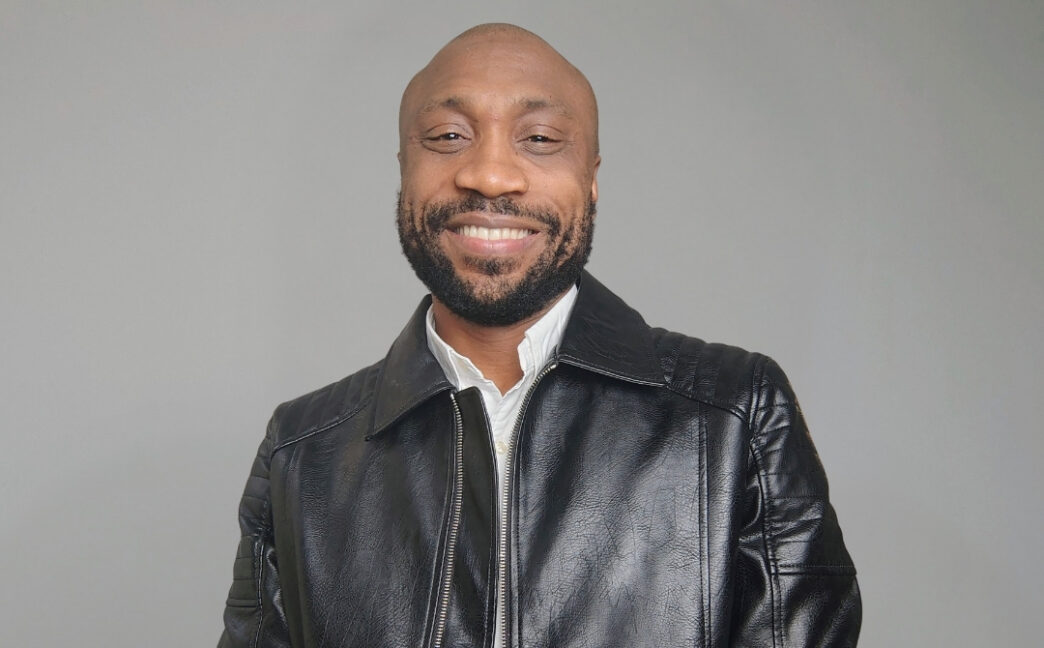
Sam Ojei built Foundersmax to become new modern venture creation engine. Startup culture has always loved mythology. The lone founder. The sudden breakthrough. The overnight success that appears to arrive out of nowhere. These stories dominate headlines, pitch decks, and conference stages. Yet behind the scenes, most companies do not fail because they lacked vision. They fail because execution quietly unravels. Foundersmax is built around rejecting that mythology and replacing it with something far less glamorous but far more durable.
Instead of treating startup creation as a sequence of lucky moments, Foundersmax approaches it as a discipline. The venture studio is focused on repeatability, not as a slogan, but as a deliberate rejection of the idea that every company must be built from scratch. Its premise is straightforward: if startups tend to fail in predictable ways, then building them should not be an act of blind faith.
Founded by Sam Ojei, Foundersmax operates at an unusual layer of the ecosystem. It is not an accelerator designed to manufacture momentum, nor a venture capital firm waiting for proof before engagement. The studio embeds itself into the earliest stages of company formation and remains involved through the most execution-heavy phases. This long-term posture is intentional. Execution problems rarely surface all at once. They accumulate quietly over time.
The studio’s model begins with a hard look at how startups actually break. Technical foundations are rushed. Product scope drifts as feedback piles up. Hiring decisions lag behind growth. Early go-to-market efforts are launched before internal systems can support them. These patterns are familiar to anyone who has built before, yet they continue to repeat because most founders face them in isolation.
Foundersmax counters this isolation by centralizing execution. Product development, engineering, design, and operational decision-making live at the studio level. Instead of assembling fragmented teams for each new venture, founders plug into an execution layer shaped by experience. This structure allows multiple companies to be built in parallel while benefiting from shared systems and accumulated knowledge.
In practice, this means early decisions are rarely made in a vacuum. Technical architecture choices are informed by prior failures as much as successes. Validation frameworks are refined through repeated use. Early growth strategies are stress-tested internally before being scaled externally. Over time, this creates a form of institutional memory that individual startups almost never possess.
Time operates differently inside Foundersmax. There are no cohorts, demo days, or artificial deadlines. Progress is measured through milestone-driven build cycles tied to product readiness, customer validation, and operational stability. This removes pressure to perform before clarity exists and allows teams to focus on building the right foundations at the right moment.
Cross-venture collaboration is not incidental; it is core to the model. Engineers, designers, and operators rotate between projects, carrying insights with them. A misstep in one startup becomes a warning sign for the next. A successful onboarding flow becomes a reference point rather than a one-off win. This constant circulation of experience allows execution quality to improve with each iteration.
Foundersmax operates across sectors including AI-driven products, education platforms, and digital tools. Each venture addresses its own market and builds its own identity. What remains consistent is how early-stage decisions are approached. Foundational choices are guided by experience rather than instinct alone.
The studio’s relationship with founders reflects this philosophy. Founders retain leadership and ownership of their companies. Foundersmax does not replace founders or dilute autonomy through surface-level support. Instead, it embeds itself into the execution layer, acting as a long-term partner rather than a temporary catalyst.
This approach appeals to founders who are weary of performance-driven startup culture. Pitch competitions, social validation, and compressed timelines often reward narrative over substance. Foundersmax deliberately deprioritizes early visibility. Teams are encouraged to ship quietly, test assumptions, and iterate until the business is operationally sound.
Sam Ojei has framed this stance as execution-first, a philosophy that runs counter to the dominant mythology of entrepreneurship. In the Foundersmax model, progress is not measured by press coverage or funding announcements. It is measured by whether the company can actually operate, learn, and adapt under real conditions.
Capital strategy follows the same logic. Fundraising is not treated as the primary milestone. Instead, Foundersmax emphasizes revenue signals, user engagement, and operational readiness. These indicators provide a clearer picture of viability than pitch metrics. When founders do engage investors, they do so with leverage rather than urgency.
Internally, Foundersmax invests heavily in its own operating systems. Shared technical stacks, workflow automation, and internal processes are continuously refined. These systems allow the studio to scale company creation without sacrificing execution quality. Each improvement compounds across future ventures.
Data plays a central role in this feedback loop. Product outcomes, performance metrics, and market responses from each startup are analyzed and documented. Patterns emerge. Weak signals become visible earlier. Over time, the studio becomes better at identifying when a problem requires patience and when it demands intervention.
Repeatability, as Foundersmax defines it, is not about eliminating risk. Markets remain unpredictable, and innovation still requires experimentation. What the studio seeks to remove is unnecessary randomness—the kind that comes from rebuilding systems that already exist or repeating mistakes that others have already paid for.
As venture studios gain traction globally, Foundersmax reflects a broader cultural shift. Startup creation is moving away from mythology and toward method. Success is increasingly understood as the product of systems that learn rather than stories that inspire.
For founders who value durability over spectacle, this shift is overdue. Foundersmax offers an alternative to compressed programs and arms-length capital, combining founder leadership with shared execution infrastructure. It is not designed to produce viral stories. It is designed to produce companies that last.
Under Sam Ojei’s leadership, Foundersmax is betting that disciplined execution will outlive startup mythology. By focusing on systems instead of stories, the studio is redefining what repeatable startup building actually looks like in practice.