Even years after generative AI burst into the mainstream, most AI startups are still earning their money the old-fashioned way. They sell to businesses, not everyday consumers.
The gap between consumer excitement and real consumer revenue remains wide.
Tools like ChatGPT spread faster than almost any consumer app in history. Yet outside of a few general-purpose platforms, most consumer AI startups are struggling to find lasting traction.
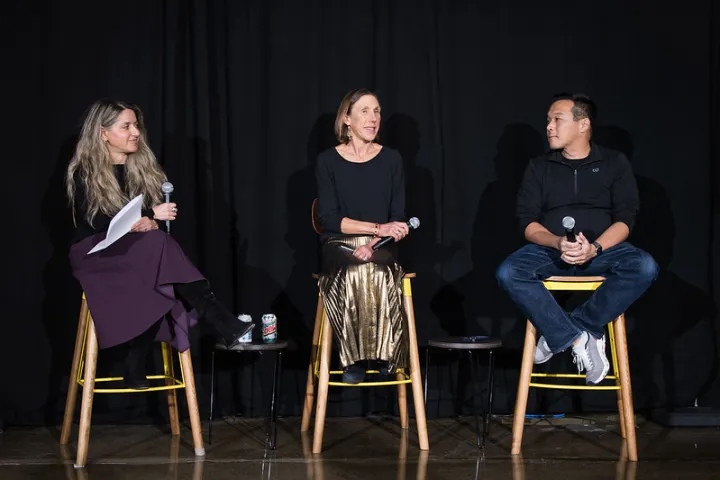
Chi-Hua Chien, co-founder and managing partner at Goodwater Capital, said many early consumer AI ideas lost their edge almost overnight.
At first, AI-powered video, audio, and image tools felt magical. They grabbed attention fast. Then the platform shifted.
Once OpenAI launched Sora, Google pushed Gemini, and Chinese teams open-sourced powerful video models, many startups lost their differentiation.
What once felt novel quickly became a built-in feature.
Chien compared those early apps to flashlight apps in the early iPhone days. They were wildly popular at launch. Then Apple added a flashlight to iOS, and the category vanished.
Consumer AI startups, he argued, are facing the same platform gravity.
When the core models improve, thin layers on top stop mattering.
That does not mean consumer AI is doomed. It means it is early.
Chien believes AI platforms still need time to stabilize before breakout consumer businesses can form. Smartphones went through the same phase.
In the late 2000s, mobile apps existed, but the rules were not clear yet. Then came the 2009 to 2010 window. That was when companies like Uber and Airbnb emerged and reshaped consumer behavior.
Chien thinks AI is nearing its own version of that moment.
He pointed to Google’s Gemini reaching technical parity with ChatGPT as one signal. When platforms stop leapfrogging every few months, startups can finally build on solid ground.
Elizabeth Weil, founder and partner at Scribble Ventures, agreed with that framing.
She described today’s consumer AI landscape as an awkward teenage phase. The tools work. The use cases exist. But nothing quite feels grown up yet.
For many investors, the missing piece may not be software at all.
It may be hardware.
Chien questioned whether smartphones are capable of unlocking AI’s full potential. Phones are used constantly, but they only see a small fraction of a person’s life.
They are not ambient. They are not always aware.
Weil echoed that concern. She suggested that future consumer AI products may not be built for smartphones at all.
Holding up her iPhone, she said she does not expect this device to be the long-term home for deeply personal AI experiences.
That belief has fueled a wave of experimentation.
Big tech and startups alike are racing to build a new kind of personal device.
OpenAI is reportedly working with former Apple design chief Jony Ive on a pocket-sized, screenless AI device. Meta is betting on smart glasses controlled by subtle wrist movements. Smaller startups are experimenting with pins, pendants, and rings.
So far, results have been mixed.
Many of these devices struggle with usability, battery life, and social acceptance. Others fail to offer a clear reason to exist alongside a smartphone.
Still, investors believe the right form factor could unlock entirely new consumer behaviors.
Not every successful consumer AI startup will depend on new hardware, though.
Chien pointed to personal finance as one area where AI could shine without replacing the phone.
A deeply personalized AI financial adviser, tuned to an individual’s goals, habits, and risk tolerance, could deliver ongoing value without feeling gimmicky.
Weil highlighted education as another promising category.
She expects always-on AI tutors to become commonplace. These tutors would adapt in real time, adjust teaching styles, and stay available whenever learning happens.
Unlike flashier AI products, these tools solve persistent problems. They save time. They reduce friction. They compound value over years.
That long-term utility is what many consumer AI startups still lack.
While both investors are optimistic about AI’s future, they are cautious about one emerging trend.
AI-powered social networks.
Several startups are quietly building platforms where AI bots interact with user-generated content at scale.
Chien is skeptical.
He argued that replacing human interaction with bots turns social media into something hollow. It becomes a single-player experience instead of a shared one.
People engage with social platforms because they know real humans are responding.
Remove that social truth, and the product risks losing its soul.
Weil shares that concern. She believes consumer AI works best when it amplifies human capability, not when it replaces human presence.
That distinction may decide which consumer AI startups survive.
The winners will not chase novelty. They will build tools people rely on daily.
They will wait for platforms to settle. They will respect human behavior. And they will deliver value that does not disappear when the next model update ships.
Consumer AI is not late.
It is still loading.