For decades, iRobot felt like a quiet American success story hiding in plain sight. The company that taught a vacuum cleaner how to think made its way into millions of homes without fanfare. Now, that story has ended in bankruptcy, foreign control, and unanswered questions about the future of consumer robotics in the US.
iRobot filed for Chapter 11 bankruptcy this week, closing the loop on a 35 year journey that started inside MIT labs and ended under the ownership of its Chinese supplier. The iRobot bankruptcy marks more than a corporate failure. It signals how fragile even iconic hardware companies have become.
The company was founded in 1990 in Bedford, Massachusetts by Rodney Brooks and his former MIT students Colin Angle and Helen Greiner. Brooks was already a legend in robotics circles. He believed intelligence did not need complexity. Simple systems, when combined, could behave in surprisingly smart ways.
That idea shaped iRobot’s early work. The company built machines that reacted to the world rather than mapping it perfectly. This approach felt radical at the time. It also worked.
In 2002, iRobot launched the Roomba. It was not sleek. It was not glamorous. But it worked. The robot vacuum became a household name and eventually a cultural reference point. People joked about it. Pets rode it. Owners named it. Roomba stopped being a product and became a verb.
Sales exploded. Over time, iRobot sold more than 50 million robots. Money followed. The company raised about $38 million before going public in 2005. That IPO brought in another $103 million and gave iRobot the capital it needed to scale.
By the mid 2010s, the company looked unstoppable. In 2015, it even launched a venture arm to invest in early robotics startups. That move signaled confidence. iRobot was no longer just surviving. It was shaping the future of the industry.
Then the market shifted.
Cheap robot vacuums began flooding in from China. Many looked similar. Many worked well enough. Prices dropped fast. At the same time, supply chain disruptions hit hardware companies hard. Costs rose. Margins shrank. Earnings started slipping as early as 2021.
iRobot needed help.
In 2022, Amazon stepped in with what looked like a lifeline. The tech giant agreed to buy iRobot for $1.7 billion. It would have been one of Amazon’s largest acquisitions. For iRobot, it promised scale, distribution, and survival.
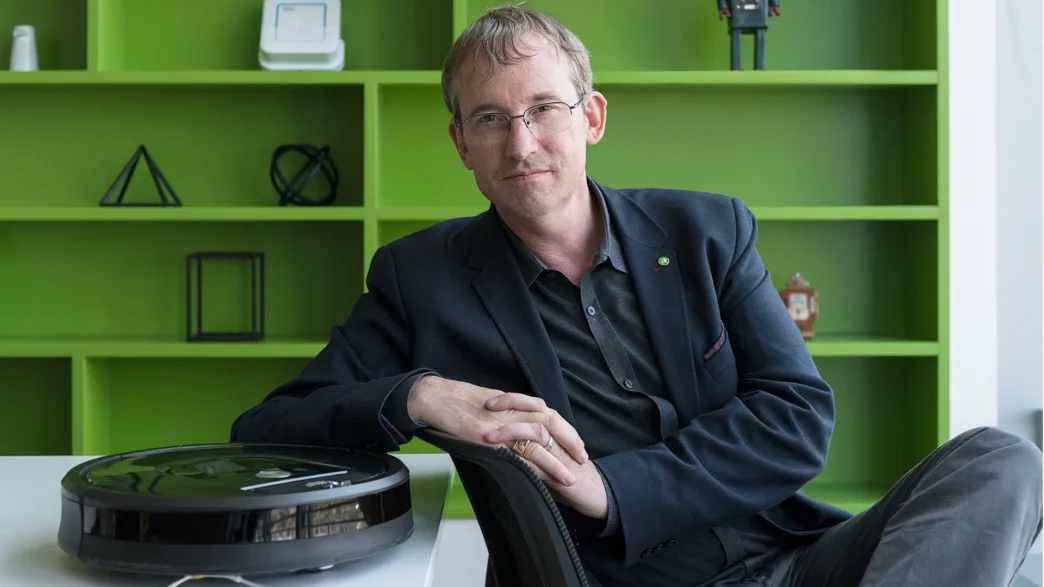
At the time, CEO Colin Angle framed the deal as a natural next step. He spoke about continuing the mission and finding the right home for the team. Many saw it as a happy ending for a pioneering robotics company.
Regulators did not.
European competition authorities raised alarms. They argued Amazon could use control over iRobot to disadvantage rival products on its marketplace. The pressure mounted. By January 2024, the deal collapsed.
Amazon walked away and paid a $94 million breakup fee. iRobot lost its most realistic exit. The stock crashed. Angle resigned. The company cut nearly a third of its workforce.
The fallout was brutal.
In public statements, Angle did not hide his frustration. He said the outcome was avoidable. He argued regulatory resistance killed the only viable path for iRobot to compete at a global scale. In his view, the iRobot bankruptcy was not a market failure. It was a policy one.
What followed was a slow decline.
The Carlyle Group stepped in during 2023 with a $200 million loan. That money kept the lights on but did not fix the core problems. Sales kept falling. Competition kept rising. Carlyle eventually sold the loan, likely at a loss.
This week, the end arrived.
As part of the bankruptcy process, Shenzhen PICEA Robotics will take control of the reorganized company. PICEA has long been iRobot’s main supplier and lender. The transition formalizes a relationship that already existed behind the scenes.
iRobot says it will continue operating during restructuring. The company claims there will be no disruption to app services, customer support, or product availability. It also says it will pay employees and vendors as required.
For now, customers are being reassured.
Company representatives insist nothing changes in day to day operations. Products remain the same. Support continues. The message is clear. Do not panic.
Still, bankruptcy brings uncertainty by definition.
Legal filings admit the risks. Suppliers could walk away. Plans could change. The restructuring might fail. Even survival is not guaranteed.
For Roomba owners, the immediate fear is losing functionality. Much of what makes modern robot vacuums feel smart lives in the cloud. Scheduling, room mapping, voice commands, and app controls all depend on servers staying online.
If those services disappear, the devices will still work. Owners can press a button and send the vacuum out. It will clean. It will return home. But the magic will be gone.
The iRobot bankruptcy leaves a deeper question hanging in the air.
How did a company that defined a category lose its edge so completely. Part of the answer lies in hardware economics. Software scales easily. Hardware does not. Once competitors match quality and undercut price, differentiation vanishes fast.
Another part lies in timing. iRobot bet on being acquired at a moment when regulators were growing more hostile to big tech deals. When that bet failed, there was no backup plan.
The final irony is hard to ignore. A company built on American academic research, funded by US capital, and loved by global consumers now survives under foreign control.
iRobot did not just lose its way home. It ran out of places to go.