
Ankar AI funding highlights a deeper shift in how companies think about intellectual property. This is not just another Series A in legal tech. It reflects a growing belief that patents are no longer paperwork to be managed but strategic assets that can shape markets, valuations, and long-term advantage. With €17 million raised to expand into the US, Ankar is positioning itself at the center of that change.
For decades, patent teams have worked inside slow, fragmented systems. Ideas moved through emails, documents, and outdated software while innovation outside those walls accelerated. As AI reshapes product development cycles, that gap has become impossible to ignore. Ankar AI funding exists because enterprises now want IP systems that move at the same speed as invention.
The round was led by Atomico, with Index Ventures doubling down and support from Norrsken VC and Daphni. Total funding now sits near €20 million. In a market where most AI-driven IP startups remain at seed stage, the size and timing of this raise stand out. Investors are not just betting on efficiency gains. They are backing a new category of infrastructure.
Ankar was founded in 2023 by Wiem Gharbi and Tamar Gomez, both former Palantir leaders. That background matters. At Palantir, they worked on systems designed to handle complexity, scale, and sensitive data. They carried those principles into a domain where precision, trust, and traceability are non-negotiable.
Patents sit at a difficult crossroads. They demand deep technical insight and strict legal reasoning. Yet the tools supporting them often fail at both. Ankar’s approach treats patents as a data problem and a strategic problem at the same time. The platform is built to orchestrate how ideas become defensible assets, not just how documents get filed.
Ankar AI funding reflects rising frustration across R&D-heavy organisations. Patents can take up to two years to secure. Teams spend a large share of their time on manual tasks that add little strategic value. This slows decision-making and discourages inventors from filing in the first place. In an AI-driven economy, that friction is no longer acceptable.
The company’s platform acts as a single operating system for the full patent lifecycle. From invention capture to prior-art analysis, drafting, and prosecution, everything lives inside one secure workflow. Large language models power deep analysis across more than 150 million patent filings and 250 million scientific publications. What once took weeks can now happen in hours.
This speed is not just about convenience. Faster analysis allows teams to decide earlier which ideas deserve protection and how broad that protection should be. It changes IP from a reactive function into a proactive one. That shift is where Ankar believes the real value lies.
Tamar Gomez argues that invention is how humanity solves its biggest challenges, yet the systems protecting those ideas are decades behind. She sees AI as the force that will finally modernise global innovation infrastructure. Companies that upgrade now will not just protect more patents. They will shape how innovation itself evolves.
Investor interest across Europe supports that view. In 2025, AI-driven legal and IP software has seen steady funding activity. Madrid-based iPNOTE raised seed funding to reduce IP costs. Amsterdam’s Saga expanded its AI tools for lawyers. Copenhagen-based Pandektes focused on automating legal research. London-based Augmetec continued building AI-powered legal workflows.
Yet most of these companies remain early-stage. When combined, disclosed funding across comparable startups still trails Ankar’s Series A. Ankar AI funding therefore marks one of the strongest signals yet that investors see IP software as core enterprise infrastructure, not a niche legal add-on.
Geographically, this activity is spread across Spain, the Netherlands, Denmark, and the UK. That dispersion suggests broad demand rather than a single local trend. While Ankar is based in London, its ambitions are global. The US expansion is a key next step, given the scale of corporate R&D and patent activity in the market.
Wiem Gharbi believes AI finally offers real leverage in patents. For years, professionals lacked tools that could reason deeply across technical and legal contexts. Ankar aims to close that gap by giving teams analytical depth they never had before. Better insight leads to better strategy and stronger protection.
Early customer data supports the pitch. According to the company, users see an average productivity boost of 40 percent. Almost all say they would recommend the platform internally. This matters as intangible assets now represent up to 90 percent of S&P 500 company value, while patent teams still spend around half their time on administrative work.
Enterprise adoption often hinges on trust. IP data is sensitive, and mistakes carry long-term consequences. Ankar’s Palantir-informed approach to security and system design helps address those concerns. The platform is built to meet enterprise standards while remaining flexible enough to adapt to different workflows.
Customer feedback also shapes the product. L’Oréal’s Competitive IP Intelligence Manager Jean-Yves Legendre notes that many vendors arrive with rigid solutions. Ankar started by understanding real needs, speaking the language of patent teams, and configuring existing technology to fit operational reality. That adaptability has helped drive adoption.
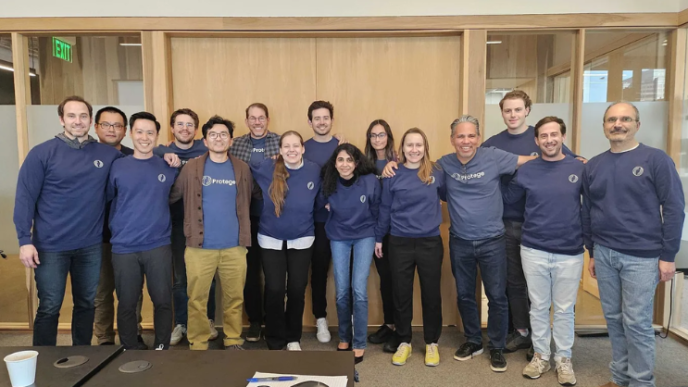
The new capital will accelerate growth. Ankar plans to double its 20-person team, hiring across engineering, product, and design. It will also expand its go-to-market efforts to support rising demand in Europe and the US. The focus is not just growth for its own sake, but building durable infrastructure.
Long term, Ankar wants to become the software layer that quietly sits behind global innovation. The founders see this layer as essential in the AI era, where ideas move fast and protection must keep pace. If successful, Ankar will not just improve patent workflows. It will redefine how organisations think about IP altogether.
Ankar AI funding therefore tells a broader story. It signals that patents are moving out of the back office and into the strategic core of the enterprise. As AI accelerates invention, the companies that master how ideas become protected assets will hold a lasting edge.