Amazon AGI team leadership is entering a new phase as the executive who built and led the group from its earliest days prepares to leave the company. The departure marks a clear turning point in how Amazon plans, structures, and accelerates its most ambitious artificial intelligence efforts at the highest level.
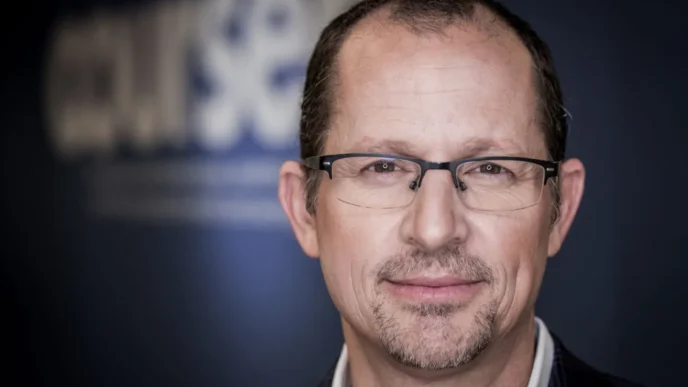
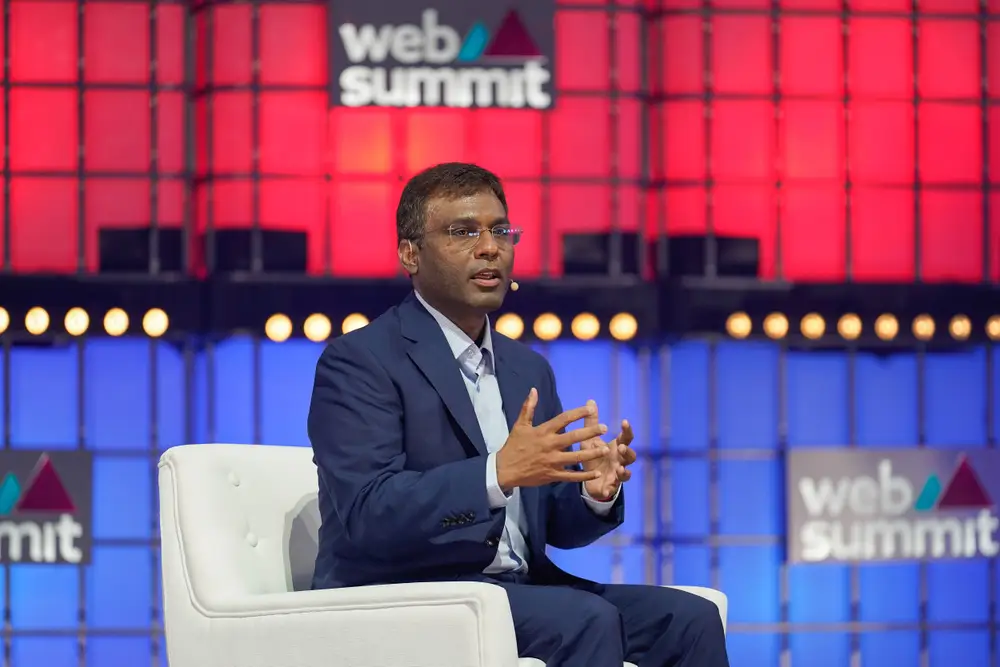
Rohit Prasad, senior vice president and head scientist, will leave Amazon at the end of the year. CEO Andy Jassy confirmed the decision internally, ending a two-year chapter that began when Amazon formally launched its Artificial General Intelligence group. At the time, the move signaled Amazon’s intent to go head-to-head with the world’s leading AI labs.
Prasad’s elevation in 2023 was a rare one. He moved into a role reporting directly to Jassy, with a mandate to build advanced AI models that could power everything from cloud services to consumer products. The Amazon AGI team was framed as the company’s boldest bet yet in a fast-moving AI arms race.
During his tenure, Prasad helped oversee the launch of Amazon’s Nova family of AI models. The models gained attention for their efficiency and cost performance, especially within AWS environments. However, they struggled to shift the broader competitive landscape dominated by frontier systems like OpenAI’s GPT models, Anthropic’s Claude Opus, and Google’s Gemini.
Inside Amazon, the focus increasingly shifted toward structure as much as speed. Jassy said the company will now consolidate its most advanced AI initiatives under a single new organization. That group will sit under Peter DeSantis, the senior vice president who leads AWS Utility Computing.
The reorganization brings together several strategic bets under one roof. The new unit will oversee the Amazon AGI team, core AI model development, custom silicon efforts, and quantum computing research. Amazon is signaling that it sees these areas as deeply connected, not separate experiments.
Leadership of frontier AI research is also changing. Pieter Abbeel, a well-known robotics researcher and co-founder of Covariant, will now lead Amazon’s frontier AI model research team. Abbeel joined Amazon last year, and his appointment reflects a growing emphasis on research depth and long-term technical breakthroughs.
The shift comes amid a broader reshuffling across AWS leadership. Over the past year, Amazon’s cloud division has seen several high-profile exits. Matt Wood, a vice president focused on AI, and Vasi Philomin, a vice president of generative AI, both departed during a period of rapid internal change.
At the same time, Amazon has been actively recruiting seasoned executives to strengthen its AI bench. Julia White, a former Microsoft executive, joined as chief marketing officer. AWS also hired David Richardson to lead AgentCore, bringing a renewed focus on autonomous agents and orchestration tools.
Joe Hellerstein came onboard as vice president and distinguished scientist, reinforcing Amazon’s push into foundational research. Chet Kapoor joined as vice president of security services and observability, highlighting the company’s growing concern around securing AI systems at scale.
Together, these moves reflect an organization still searching for the right formula. Amazon entered the generative AI race later than some rivals, and it has been working to balance speed, cost, and scientific ambition. The Amazon AGI team was meant to close that gap quickly.
Instead, the effort now appears to be evolving into something broader and more integrated. By aligning AI models with silicon and quantum research, Amazon is betting that deep infrastructure control will become a long-term advantage. AWS already dominates cloud computing, and leadership hopes that tight vertical integration can differentiate its AI offerings.
Prasad’s departure does not signal a retreat from AI. If anything, it underscores how competitive and unforgiving the current landscape has become. Building frontier models now requires massive capital, elite research talent, and organizational clarity that few companies can sustain for long.
Amazon remains one of them, but the company is clearly still refining its approach. The Amazon AGI team may no longer sit as a standalone moonshot. Instead, it is being folded into a broader machine designed to compete not just on model quality, but on infrastructure, cost, and scale.
As the year closes, Amazon’s AI story is less about one executive and more about direction. With new leadership, a reshaped org chart, and renewed emphasis on foundational technology, the company is resetting its long-term AI ambitions at a moment when the stakes could not be higher.