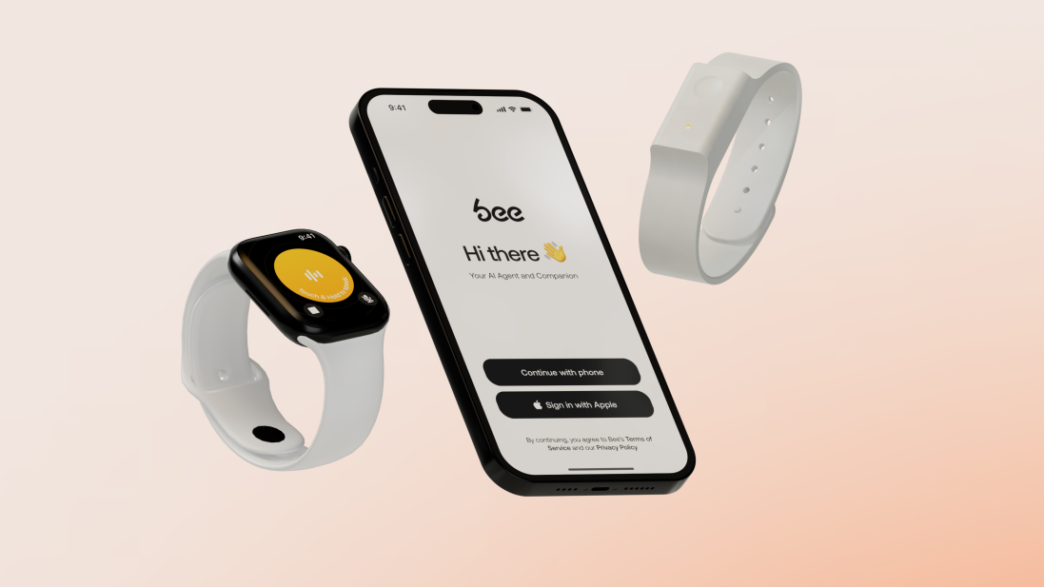
Amazon Bee AI wearable is the company’s boldest attempt yet to bring artificial intelligence out of the screen and into everyday life. Early hands-on testing shows a device that feels surprisingly simple despite the ambition behind it. A single button controls recording, which makes the experience feel natural instead of technical.
One press starts or stops listening, while the companion app allows deeper customization. Users can decide if a double press bookmarks a moment, processes the ongoing conversation, or does both at once. A press-and-hold gesture can either save a voice note or open a direct chat with the AI assistant, creating flexibility without clutter.
The Bee app plays a major role in shaping the experience. From the start, it nudges users to enable voice notes, signaling that Amazon wants Bee to act as a personal memory layer rather than a passive recorder. The setup feels intentional and modern, which is notable given Amazon’s mixed history with consumer apps. Compared to older in-house products like Alexa’s mobile interface, Bee’s app feels clean, responsive, and designed around how people actually scroll and skim content on their phones.
At its core, Amazon Bee AI wearable competes in a crowded field of AI-powered audio tools. Products like Plaud, Granola, Fathom, Fireflies, and Otter already record and transcribe conversations. Bee separates itself by focusing less on raw transcripts and more on structured understanding. Instead of dumping a wall of text, the app breaks conversations into logical sections and summarizes each part. An interview, for example, might be split into an opening exchange, a deep dive into product details, a broader industry discussion, and a closing wrap-up. This approach makes reviewing conversations faster and far more approachable.
Each segment appears with a distinct background color, which helps users visually scan long recordings. Tapping into any section reveals the full transcription beneath the summary. This layered design encourages quick reviews while still allowing deeper inspection when accuracy matters. It feels designed for memory recall rather than documentation, which hints at Amazon’s broader vision for the product.
That vision becomes clearer when looking at Bee’s limitations. Speaker labeling, for instance, is minimal. Users can tap a segment to confirm whether they were the speaker, but they cannot assign names to other voices. This puts Bee behind professional transcription tools used for meetings or interviews. More importantly, the device deletes audio after transcription. Once the text is generated, the original recording is gone. That makes Bee unsuitable for scenarios where users need to replay audio to verify quotes or tone.
These constraints appear intentional. Amazon does not position Bee as a productivity tool for journalists or corporate teams. Instead, it frames the device as a personal AI companion that lives alongside the user throughout the day. By integrating with Google services, Bee can turn conversations into suggested actions. After meeting someone at a conference, the app might prompt you to connect on LinkedIn or research the person’s company. This shifts Bee from being a recorder to being an assistant that interprets social context.
Voice notes further support that goal. Instead of typing reminders or thoughts into a notes app, users can speak naturally and let Bee organize the information. Over time, the app builds a timeline of daily memories. A dedicated section allows users to review past days, while a “Grow” area promises deeper insights as the AI learns patterns. There is also a facts section where users can confirm or add personal details, similar to memory features found in other AI chatbots.
Amazon has confirmed that more features are coming over the next year, suggesting Bee is just the foundation of a larger ecosystem. Still, hardware design plays a critical role in whether that ecosystem can succeed. The Bee sports band, while lightweight, feels underbuilt. During testing, it slipped off twice while the wearer was barely moving, even while sitting in a taxi. That raises concerns about long-term durability and everyday reliability. The clip-on pin accessory, while not fully tested, feels sturdier and may be better suited for daily use.
Privacy is where Amazon Bee AI wearable faces its biggest test. Unlike some rival products, Bee is not always listening. This design choice helps it avoid the backlash faced by devices like the Friend AI pendant. Users must actively choose when to record, and etiquette is clearly part of the intended experience. Amazon encourages users to ask permission before recording conversations, except in public settings where recording is already expected.
When Bee is active, a green light turns on to alert others that recording is happening. This visible signal is a small but meaningful step toward transparency. Even so, social norms around AI listening devices are still undefined. Recording everyday conversations, even legally, often feels invasive. As these devices become more common, people may begin to self-censor in public spaces, unsure of when they are being recorded.
That tension was evident during casual conversations at CES. In one moment, a representative at a booth joked about speaking louder into their already-recording AI device after agreeing with a comment about a competitor’s product. The humor masked an uncomfortable realization. If AI wearables become widespread, almost anything said in public could end up “on the record,” whether everyone involved agrees or not.
The question, then, is not whether Amazon Bee AI wearable works. Early tests suggest it does what it promises, and it does so with a level of polish uncommon for first-generation hardware. The deeper question is whether consumers actually want an AI dedicated to listening, remembering, and learning from their conversations. Outside of professional settings like meetings or interviews, that value proposition remains unproven.
Cultural acceptance will likely determine Bee’s fate as much as its technology. If society embraces AI-assisted memory as a convenience, Bee could feel as normal as a smartwatch. If not, it risks being seen as intrusive or unnecessary. Amazon appears aware of this uncertainty, positioning Bee carefully and watching early traction closely.
For now, Bee feels like a thoughtful experiment. The app experience is strong, the AI summaries are genuinely useful, and the hardware, while imperfect, is approachable. Whether that is enough to change how people think about recording their lives remains an open question. Bee’s success or failure will not just shape Amazon’s wearable strategy, but also signal whether consumers are ready for AI that listens as much as it speaks.