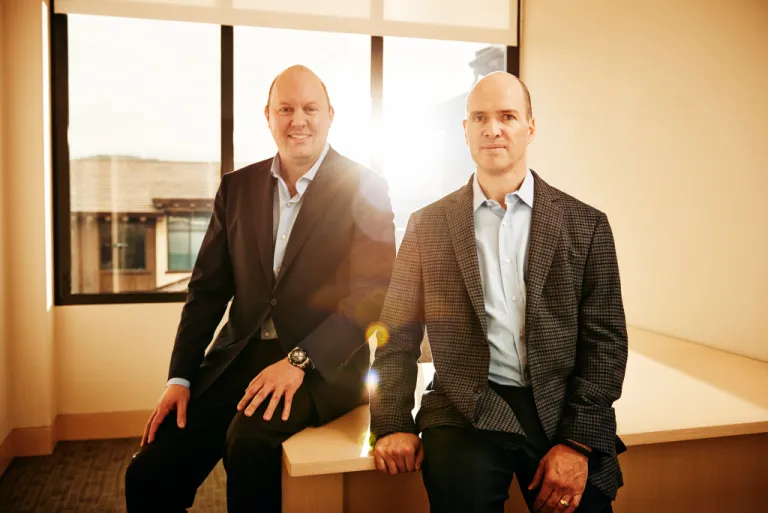
Andreessen Horowitz has once again reset expectations in Silicon Valley after announcing more than fifteen billion dollars in fresh capital commitments. The latest raise pushes the venture firm’s total assets under management past ninety billion dollars, placing it side by side with long-established giants like Sequoia Capital. According to co-founder Ben Horowitz, the new funds alone represent over eighteen percent of all venture capital allocated in the United States during 2025, a figure that underscores just how dominant the firm has become.
What makes the announcement more striking is the speed and scale at which Andreessen Horowitz continues to grow. Once a boutique Silicon Valley partnership, the firm now employs hundreds of people across offices in California, New York, and Washington, D.C. Its reach extends across six continents, and late last year it opened its first Asia office in Seoul to support its expanding crypto investment practice. The firm now operates less like a traditional venture partnership and more like a global financial institution with deep political and industrial ties.
The newly raised capital is spread across five major investment vehicles. The largest share, nearly seven billion dollars, is earmarked for growth-stage investments. Dedicated funds for applications and infrastructure each received more than one and a half billion dollars. Another fund, branded internally as American Dynamism, attracted over a billion dollars. Biotech and healthcare drew seven hundred million dollars, while several other venture strategies accounted for the remaining three billion. The numbers are so large they prompt a simple question that Andreessen Horowitz has long avoided answering directly. Where does all this money come from, and how much has it actually returned to investors?
The firm has historically declined to disclose the identities of most limited partners or detailed performance metrics like its distributed-to-paid-in capital ratio. That opacity has been part of its brand, even as it courts some of the world’s largest pools of capital. One exception surfaced in 2023 when CalPERS committed four hundred million dollars, marking the first time the firm accepted money from a major California public pension. Around the same period, Sanabil Investments, the venture arm of Saudi Arabia’s Public Investment Fund, publicly listed Andreessen Horowitz among its portfolio holdings.
The Saudi relationship has been visible for years. In 2023, Ben Horowitz and co-founder Marc Andreessen appeared on stage alongside WeWork founder Adam Neumann to promote a massive investment in Neumann’s real estate startup Flow. The event was backed by a Saudi sovereign fund, and Horowitz openly praised Saudi Arabia as a founder-driven startup nation. The remarks drew attention, not only for their tone, but for what they revealed about how closely the firm works with sovereign capital.
Andreessen’s political influence inside the United States has expanded just as quickly. Following the November 2024 election victory of Donald Trump, Andreessen spent significant time advising on technology and economic policy. He also served as an unpaid contributor to the Department of Government Efficiency led by Elon Musk, helping vet candidates for roles across federal agencies, including defense and intelligence. Another longtime Andreessen Horowitz partner, Scott Kupor, was sworn in last summer as director of the U.S. Office of Personnel Management, further tightening the firm’s connection to Washington.
These relationships matter because Andreessen Horowitz’s investment strategy is increasingly aligned with national policy priorities. The firm’s American Dynamism practice focuses on defense, aerospace, public safety, manufacturing, housing, and education. Its portfolio reads like a list of emerging Pentagon suppliers, including autonomous defense companies such as Anduril, Shield AI, Saronic Technologies, and hypersonics startup Castelion. The underlying thesis is blunt. The United States must reindustrialize and rebuild domestic manufacturing capacity or risk strategic vulnerability in future conflicts.
The firm has publicly argued that the U.S. would exhaust its missile inventory in days during a large-scale conflict with China over Taiwan, then need years to replenish supplies. By backing startups that design autonomous systems, advanced weapons, and resilient supply chains, Andreessen Horowitz is betting that venture capital can play a direct role in national defense. That approach blurs the line between private investment and public policy, a line the firm appears increasingly comfortable crossing.
Alongside defense, artificial intelligence represents the firm’s most ambitious and risky bet. Andreessen Horowitz has positioned itself across every layer of the AI stack. At the infrastructure level, it backs companies like Databricks. At the model layer, it holds stakes in leading developers such as OpenAI, xAI, and Mistral AI. On the application side, it supports consumer and enterprise platforms including Character.AI and dozens of others building AI-native products.
The firm’s confidence comes from a long list of past wins. Its early twenty-five-million-dollar investment in Coinbase helped fuel a public debut that briefly valued the crypto exchange at eighty-six billion dollars. It backed Airbnb before its IPO crossed the hundred-billion-dollar mark. It also scored major exits with Slack, acquired for nearly twenty-eight billion dollars, and GitHub, sold to Microsoft for seven and a half billion dollars.
According to data from Tracxn, the firm’s portfolio includes more than one hundred unicorns, dozens of public listings, and hundreds of acquisitions. Not every bet has paid off. Andreessen Horowitz has both gained and lost money trading cryptocurrency tokens, though those results remain far less transparent than its equity investments. Even so, the overall track record gives the firm credibility when it asks investors for ever larger checks.
In a recent blog post, Ben Horowitz framed the firm’s mission in sweeping terms, arguing that as America’s leading venture capital firm, the future of U.S. technology partly rests on its decisions. He described the goal as ensuring American leadership over the next century of innovation. Such language is bound to irritate older rivals with longer histories, but it also reflects how Andreessen Horowitz sees itself. Not just as a financial intermediary, but as a strategic actor shaping technology, industry, and geopolitics.
Whether that vision ultimately succeeds is an open question. What is clear is that Andreessen Horowitz has mastered the art of raising money at a scale few thought possible for a venture firm. Fifteen billion dollars in one raise is proof that its pitch resonates. That pitch blends Silicon Valley ambition with sovereign capital, political access, and defense priorities. It runs through Riyadh, Washington, and the Pentagon as much as it does through startup garages. For now, investors are buying in, and Andreessen Horowitz shows no sign of slowing down.