
San Francisco’s Axiom Math has stepped out of stealth with a bold plan and fresh capital. The startup, founded by Stanford dropout Carina Hong, secured a $64 million seed round led by B Capital, with Greycroft, Madrona Venture Group, and Menlo Ventures joining in. The deal values the company at about $300 million.
With this funding, Axiom will grow its engineering and research team, improve its reasoning engines, and test its system on tough benchmark problems in physics, cryptography, and advanced algorithms. The vision is to create an AI mathematician that does more than solve equations. It generates new mathematical knowledge.
The company’s system builds rigorous, step-by-step proofs. These can be verified using proof assistants such as Lean and Coq. By converting the language of math from textbooks and research into code, the AI can propose new conjectures and confirm them. This approach pushes past today’s boundaries in mathematics.
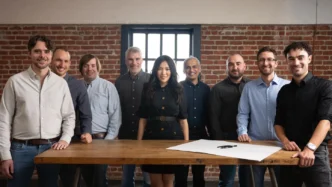
Hong has assembled an impressive team of experts, many with experience at Meta’s FAIR lab. Among them are Francois Charton, who cracked a century-old math problem; Aram Markosyan, a specialist in AI safety; and Hugh Leather, a pioneer in deep learning for code generation. Their expertise strengthens Axiom’s ambitious mission.
The company’s Palo Alto office reflects its culture of discovery. Conference rooms are named after legends like Carl Friedrich Gauss and Ada Lovelace. For investors, this passion for foundational science is part of the appeal.
Beyond theory, Axiom’s AI already shows promise for real-world use. It is being tested in finance, chip design, and aircraft engineering—fields where accuracy and efficiency are critical. Quantitative trading and cryptography are also on the list of applications. Yan-David Erlich, a partner at B Capital, noted that solving hard math problems has always powered human invention. Axiom aims to scale that process with AI.
Armed with deep expertise, strong backers, and a clear vision, Axiom Math is positioning itself to transform how breakthroughs are discovered. The company is not only teaching AI the language of mathematics. It is working to reshape scientific progress and industry innovation.
Another reason Axiom is drawing attention is the timing of its launch. Interest in reasoning-focused AI has surged as researchers hit limits with pattern-based models. Many labs now believe the next leap will come from systems that can reason symbolically, verify their own work, and build on prior results. Axiom is placing a clear bet on that direction by starting with mathematics, the most formal and unforgiving domain of reasoning.
Investors also see strategic value in Axiom’s verification-first approach. Unlike generative models that produce plausible but fragile answers, Axiom’s proofs can be checked line by line. That property is especially attractive in high-stakes environments where mistakes carry real cost. In areas like cryptography or chip design, a single error can cascade into massive failures. Verified reasoning offers a level of trust that current AI systems struggle to provide.
The company’s long-term ambition reaches beyond math alone. By mastering formal reasoning, Axiom believes its system can become a foundation for scientific discovery more broadly. Physics, computer science, and engineering all rely on mathematical structure. If an AI can navigate that structure reliably, it could accelerate progress across multiple disciplines at once.
For now, Axiom remains focused on building depth before breadth. The team is prioritizing correctness, interpretability, and proof quality over flashy demos. That patience reflects Hong’s belief that true breakthroughs come from rigor, not speed alone. If successful, Axiom Math could help redefine what it means for AI to discover, not just assist, in the advancement of human knowledge.
There is also a symbolic weight to Axiom’s emergence. A Stanford dropout building a company around deep mathematical rigor challenges the assumption that AI progress must come from massive consumer products or brute-force scale.
Instead, Axiom is reviving an older tradition of scientific ambition, where insight, proof, and theory drive lasting impact. If the company succeeds, it could mark a shift in how AI startups are valued, not by speed to market, but by their ability to expand the frontier of human knowledge itself.