
AI chipmaker Cerebras Systems has secured a massive $1.1 billion Series G round, even as its much-anticipated IPO remains on hold. The new funding round values the Silicon Valley-based company at $8.1 billion and highlights just how strong investor demand for AI infrastructure has become.
The financing was co-led by Fidelity and Atreides Management, with backing from Tiger Global, Valor Equity Partners, and 1789 Capital. With this latest raise, Cerebras has now pulled in nearly $2 billion since its founding in 2015, cementing its place as one of Nvidia’s top rivals in the AI hardware race. Its last funding event was in 2021, when it raised $250 million at a valuation just over $4 billion.
Growth Driven by AI Inference Services
CEO and co-founder Andrew Feldman said the company’s sharp growth over the past year is directly tied to the launch of its AI inference services. Inference—using AI models to generate real-world outputs—has quickly become a core business driver.
By mid-2024, Feldman and his team saw what he described as a tipping point: AI models were no longer experimental but genuinely useful at scale. That insight led Cerebras to double down on infrastructure, expand hiring, and launch its inference cloud in August 2024. Since then, demand has surged, pushing the company to rapidly grow its capacity.
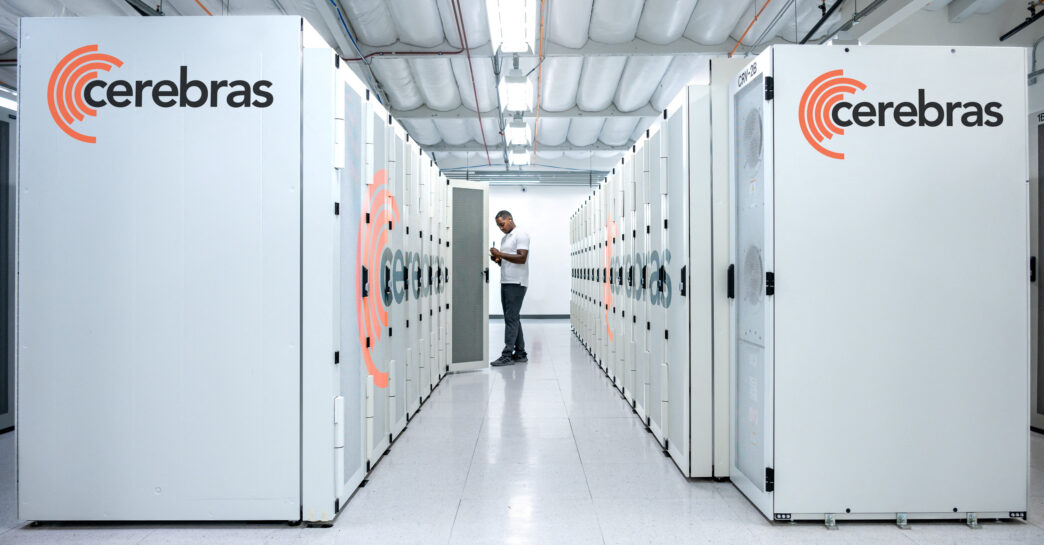
In 2025 alone, Cerebras has opened five new data centers in locations such as Dallas, Oklahoma City, and Santa Clara, with further expansions planned for Montreal and multiple European sites. The fresh capital will primarily be used to build out these facilities and expand U.S.-based manufacturing hubs, alongside undisclosed technology advancements.
IPO Still in the Cards
Cerebras originally filed for an IPO on September 30, 2024. However, the listing stalled after the Committee on Foreign Investment in the United States (CFIUS) began reviewing a $335 million investment from Abu Dhabi-based G42. Additional delays surfaced in early 2025 due to unfilled roles at CFIUS following President Donald Trump’s return to office.
Despite the setbacks, Feldman confirmed that going public remains the goal. The strategy, he explained, is to secure a major late-stage round from public-market-focused investors ahead of an eventual listing. This approach mirrors the path of many high-growth startups preparing to transition into the public markets.
“We chose a small number of leaders who will support us not just in this round but through the IPO process,” Feldman noted, adding that becoming a public company is still very much in Cerebras’ sights.
With nearly a decade of research and billions in capital behind it, Cerebras is betting big that its AI chips and cloud systems can fuel the next wave of demand in artificial intelligence—while positioning itself to compete head-on with Nvidia as the industry enters a new phase of scale.
Another factor strengthening Cerebras’ position is its differentiated architecture. Unlike traditional GPU-based systems, Cerebras builds wafer-scale processors designed to handle massive AI models without the same networking overhead. This approach reduces latency and simplifies scaling, which is increasingly important as inference workloads demand faster response times and more predictable performance. As enterprises shift from training experiments to production AI systems, these advantages are becoming more tangible.
The company is also benefiting from a broader shift in AI economics. While training large models remains expensive and concentrated among a few players, inference is becoming the real revenue engine. Every deployed AI product needs reliable, cost-efficient inference at scale. Cerebras is positioning its cloud offering as a direct alternative to GPU-heavy stacks, appealing to customers looking to diversify suppliers and avoid dependence on a single hardware vendor.
Regulatory dynamics may also work in Cerebras’ favor. As governments scrutinize AI infrastructure supply chains, demand for U.S.-based manufacturing and domestically controlled compute is rising. Cerebras’ focus on expanding U.S. production capacity aligns with that trend, potentially opening doors to public-sector and defense-related contracts alongside commercial customers.
For now, the delayed IPO has not slowed momentum. If anything, the $1.1 billion round signals that private markets remain eager to fund companies building the physical backbone of AI. When Cerebras does eventually go public, it is likely to do so not as a speculative bet, but as a scaled infrastructure provider with real revenue, global data centers, and a clear role in the next phase of artificial intelligence.