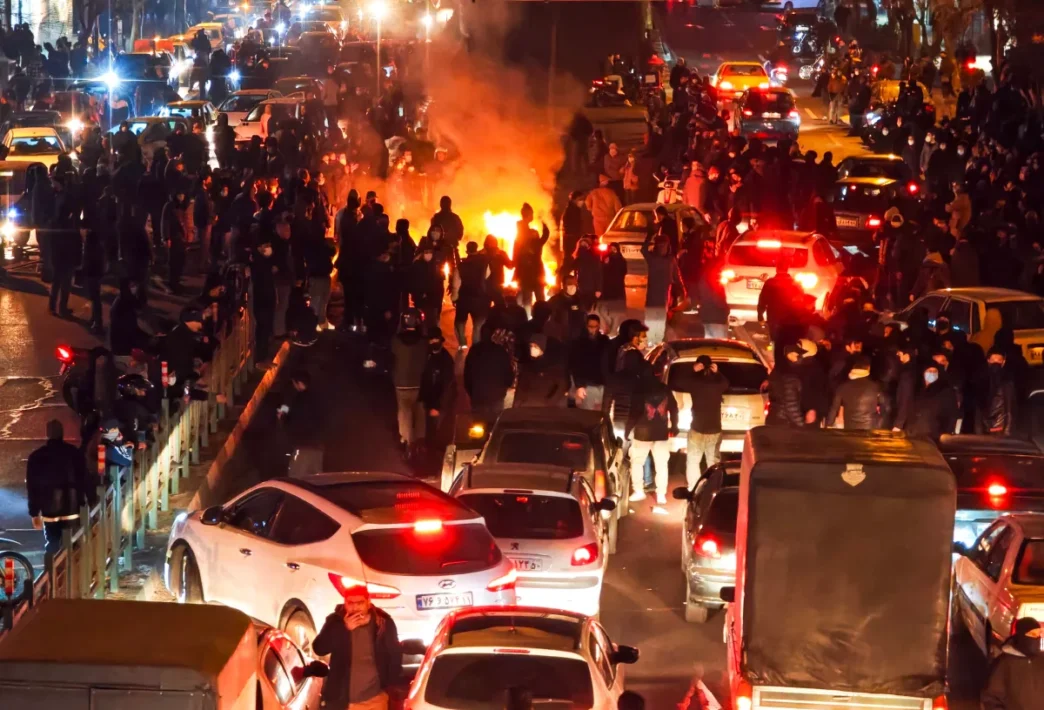
Iran internet shutdown has now stretched beyond a full week, placing the country among the longest-running nationwide digital blackouts ever recorded. More than 92 million people across Iran remain cut off from online communication, as authorities continue a sweeping response to widespread anti-government demonstrations that erupted late last year. The scale and duration of the disruption are drawing renewed global concern as the blackout deepens social isolation and blocks outside visibility into events on the ground.
The shutdown began suddenly last Thursday when Iran’s leadership ordered a near-total suspension of internet and phone services nationwide. The move followed escalating protests that quickly spread to cities across the country. Since then, residents have endured more than 170 consecutive hours without meaningful internet access, a figure that already surpasses two of Iran’s most notorious past shutdowns. For millions, daily life has been pushed into a digital void, cutting off families, businesses, and emergency communication channels.
Researchers who track global connectivity disruptions say the current Iran internet shutdown now ranks as the country’s third longest on record. Previous blackouts peaked at roughly 163 hours during nationwide unrest in 2019 and about 160 hours during a major disruption in 2025. This time, the outage has already eclipsed both benchmarks, highlighting how aggressively and comprehensively the blackout has been enforced across population centers.
According to Isik Mater, director of research at NetBlocks, Iran’s approach stands out for its breadth and precision. He explained that few governments have demonstrated the same ability to sever connectivity so thoroughly across an entire nation. Mater noted that while other countries have imposed longer shutdowns, Iran’s blackout remains among the most impactful due to the sheer number of people affected at once.
On the global scale, only a handful of internet shutdowns have exceeded Iran’s current outage. Mater pointed to Sudan’s mid-2021 blackout, which lasted roughly 35 days, and Mauritania’s July 2024 disruption, which stretched for 22 days. While Iran has not yet reached those extremes, experts warn that the current trajectory places it firmly among the longest and most consequential shutdowns in modern internet history.
Other digital rights groups echo that assessment. Zach Rosson, a researcher with Access Now, said the ongoing Iran internet shutdown is on course to break into the top tier of historical blackouts tracked by his organization. He emphasized that prolonged outages of this nature often signal sustained political crises rather than short-term security measures.
Iran’s leadership has repeatedly used internet shutdowns as a tool during moments of unrest. Over the past decade, authorities have restricted connectivity during protests to limit coordination among demonstrators and to reduce the flow of images and videos to the outside world. Each shutdown has reinforced a pattern in which digital silence becomes an extension of state control during periods of dissent.
The current protests appear to be among the most extensive in recent years. A U.S.-based human rights organization estimates that more than 600 demonstrations have taken place across Iranian cities. Reports from activists and observers suggest that the government’s crackdown has been both violent and deadly, with at least 2,000 people believed to have been killed since the unrest began. Without internet access, independent verification of these figures remains extremely difficult.
The January 8 shutdown was particularly abrupt. It not only cut citizens off from social media and messaging platforms but also disconnected government institutions, including Iran’s foreign ministry. This level of disruption underscored the sweeping nature of the order and revealed how broadly the shutdown was applied, even at the expense of state operations.
Over time, limited connectivity has been selectively restored. Some government departments regained access, and certain economic systems were allowed back online. Bank transfers and payment processors at gas stations resumed operation in parts of the country, according to reporting from international financial outlets. Still, these narrow restorations have done little to ease the broader communications blackout facing the public.
Amid the shutdown, a small but unknown number of Iranians have reportedly turned to alternative methods to get online. Some have relied on Starlink terminals smuggled into the country to bypass state-controlled networks. Operated by Starlink, the satellite system has emerged as a rare digital lifeline during Iran’s blackout, although access remains risky and limited.
The presence of Starlink in Iran traces back to a 2022 decision by the Biden administration to carve out an exemption in U.S. sanctions. That policy aimed to expand support for internet freedom by allowing American tech companies to provide free connectivity tools to Iranians. The exemption paved the way for Starlink to operate, at least unofficially, inside the country.
Iranian authorities have since moved aggressively to counter that access. Ownership of Starlink terminals has been declared illegal. Security forces have reportedly jammed signals across entire neighborhoods and confiscated devices when discovered. These measures have further narrowed the already small window for independent online communication during the shutdown.
International tensions have intensified alongside the digital blackout. This week, Donald Trump warned of possible military intervention if Iranian forces continued using violence against protesters. At the same time, the United States reportedly reduced personnel at a military base in neighboring Qatar due to concerns about retaliation.
Military movements have added to the sense of instability. Reports indicate that a U.S. naval strike group was redirected from the South China Sea toward the Middle East, signaling heightened readiness amid the unfolding crisis. These developments have amplified global attention on Iran as protests and the internet shutdown continue.
Trump later struck a more cautious tone, saying he had information suggesting that killings and executions had paused. Even then, he conceded uncertainty, acknowledging that the situation remained fluid and unpredictable. His remarks underscored the difficulty of assessing conditions inside Iran while the internet remains largely inaccessible.
Diplomatic fallout has followed. The United Kingdom temporarily closed its embassy in Tehran and evacuated staff, citing security concerns. Iran also shut down its airspace for a period, further isolating the country as unrest and uncertainty mounted. The capital, Tehran, has remained a focal point of both protests and government response.
As the Iran internet shutdown enters its second week, experts warn that prolonged digital isolation carries long-term consequences. Beyond immediate economic losses, sustained blackouts erode trust, deepen fear, and make accountability far harder to achieve. For millions of Iranians, the silence imposed by the shutdown has become another layer of hardship layered onto an already volatile moment.
Whether connectivity will be fully restored soon remains unclear. Past shutdowns ended abruptly once authorities felt protests had subsided. Yet with demonstrations continuing and international pressure growing, the current blackout may persist. Each additional hour pushes Iran further up the list of longest internet shutdowns ever recorded, cementing this moment as one of the most severe digital crackdowns in the modern era.