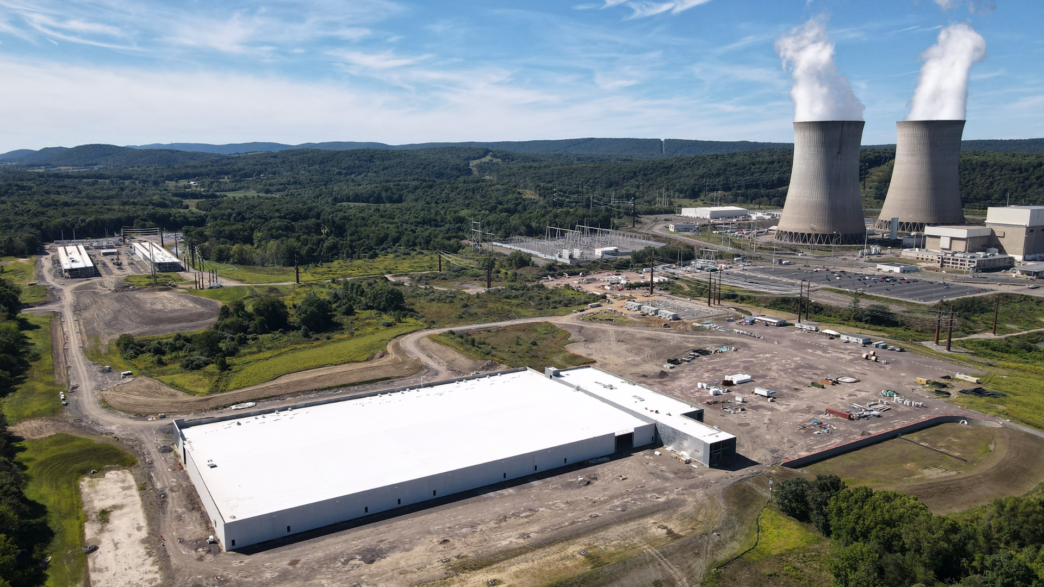
Meta nuclear power deal marks a decisive shift in how the world’s largest AI platforms secure long-term energy. Meta confirmed it has signed three separate nuclear power agreements that together exceed six gigawatts of capacity, underscoring how urgent and permanent its data center energy needs have become. The company is sourcing electricity from a mix of established reactors and next-generation nuclear startups, signaling confidence in both proven infrastructure and emerging reactor designs.
The Meta nuclear power deal spans three partners with very different profiles. Oklo and TerraPower are building small modular reactors, while Vistra is supplying capacity from existing nuclear plants already operating in the United States. This blended approach allows Meta to meet immediate demand while locking in future generation as AI workloads expand.
Nuclear power has rapidly become the preferred energy source for hyperscale data centers. Unlike wind or solar, nuclear reactors deliver steady electricity around the clock. For AI systems that must run continuously, that reliability matters as much as cost. As AI training and inference loads surge, Meta and its peers are racing to secure firm power before grid congestion worsens.
Existing nuclear reactors remain the cheapest source of baseload electricity on the grid. However, supply is limited. That scarcity is pushing technology companies toward small modular reactor developers. SMR startups argue that smaller reactors can be built faster, deployed closer to demand centers, and eventually produced at scale. The Meta nuclear power deal gives these companies a rare chance to prove that theory with a guaranteed buyer.
The agreements stem from a request for proposals Meta issued in late 2024. The company asked potential partners to deliver between one and four gigawatts of new generation by the early 2030s. Much of that power will flow through the PJM Interconnection, which serves large parts of the Midwest and Mid-Atlantic. That grid has become increasingly strained as data center construction accelerates.
Vistra’s contract will affect Meta first. The 20-year deal covers 2.1 gigawatts of electricity from the Perry and Davis-Besse nuclear plants in Ohio. Because these reactors are already operating, the power will be cheaper and more predictable than any new build. Meta gains immediate energy security while avoiding long construction timelines.
The Meta nuclear power deal with Vistra also includes upgrades. Vistra plans to expand capacity at its Ohio plants and at the Beaver Valley facility in Pennsylvania. Those improvements will add roughly 433 megawatts of additional output, with delivery expected in the early 2030s. For Meta, this means incremental growth without waiting for entirely new reactors to be approved.
Oklo represents the most ambitious portion of the Meta nuclear power deal. Meta committed to buying 1.2 gigawatts from the startup, which hopes to begin supplying electricity around 2030. Oklo went public in 2023 through a SPAC merger and has already signed a large agreement with data center operator Switch. However, regulatory hurdles remain.
Oklo’s Aurora Powerhouse reactors each generate 75 megawatts. To meet Meta’s demand, the company will need to build more than a dozen units. The reactors are planned for Pike County, Ohio, assuming approvals move forward. Oklo has faced delays with the Nuclear Regulatory Commission, making its timeline ambitious but potentially transformative if achieved.
TerraPower brings a different technology and a smoother regulatory track record. The company was co-founded by Bill Gates and has developed a sodium-cooled reactor paired with molten salt energy storage. This design allows excess heat to be stored and released when demand spikes, adding flexibility rarely seen in nuclear systems.
Under the Meta nuclear power deal, TerraPower expects to begin delivering electricity by 2032. Its reactor produces 345 megawatts, while the storage system can add between 100 and 500 megawatts for several hours. The first two units for Meta would supply 690 megawatts. Meta also holds options for six more reactors, which would raise total capacity to 2.8 gigawatts plus storage.
TerraPower is building its first commercial plant in Wyoming in partnership with GE Hitachi. The project has progressed more smoothly through licensing, giving Meta greater confidence in delivery timelines. For data centers that must plan decades ahead, that certainty carries real value.
Meta declined to disclose financial terms, but cost differences between partners are clear. Electricity from Vistra’s operating plants will almost certainly be the cheapest. Nuclear facilities that have already paid off construction costs can deliver power at some of the lowest prices on the grid.
Costs for SMRs remain uncertain. TerraPower has projected future costs of fifty to sixty dollars per megawatt-hour, while Oklo has estimated a broader range of eighty to one hundred thirty dollars. Those figures assume later plants benefit from learning curves. Early reactors are expected to cost more.
Despite those uncertainties, the Meta nuclear power deal highlights how urgently tech giants need long-term energy solutions. AI growth is no longer theoretical. It is already reshaping grids, permitting strategies, and capital flows. By committing to nuclear at this scale, Meta is signaling that its AI ambitions are permanent and that conventional power markets may no longer be enough.
The deals also send a strong message to regulators and utilities. Demand from hyperscalers can de-risk nuclear projects that once struggled to find buyers. If Oklo and TerraPower succeed, other data center operators are likely to follow. The result could be a new nuclear build cycle driven not by governments, but by AI infrastructure.
In that sense, the Meta nuclear power deal is about more than electricity. It reflects a structural shift in how digital platforms think about energy, reliability, and long-term planning. As AI becomes central to global computing, nuclear power is quietly becoming one of its most critical foundations.
Five SEO-optimized titles follow. Meta nuclear power deal delivers major breakthrough for AI energy. Meta nuclear power deal signals critical shift toward nuclear grids. Meta nuclear power deal sparks surprising momentum in SMRs. Meta nuclear power deal drives essential change in data centers. Meta nuclear power deal fuels bold future for AI growth.
Five meta descriptions follow. Meta nuclear power deal secures over six gigawatts for AI data centers. Discover how nuclear is reshaping tech energy. Meta nuclear power deal backs SMRs and existing reactors to power AI growth. Read the full analysis now. Meta nuclear power deal reveals why nuclear is winning the data center race. Learn what it means for grids. Meta nuclear power deal shows how AI is driving new reactor builds. Explore the impact today. Meta nuclear power deal locks in long-term clean energy for Meta’s AI future. Get the details.
SEO-optimized image ALT text suggestions follow. Meta nuclear power deal powering AI data centers. Meta nuclear power deal with small modular reactors. Meta nuclear power deal involving Oklo Aurora reactors. Meta nuclear power deal and TerraPower sodium reactor design. Meta nuclear power deal with Vistra nuclear plants.
Three internal link suggestions follow. Data center energy strategy and grid congestion analysis. AI infrastructure expansion and power demand trends. Nuclear energy policy and advanced reactor regulation.
Two high-authority external link suggestions follow. U.S. Department of Energy nuclear energy overview. International Atomic Energy Agency advanced reactor programs.
Image type suggestions follow. Data center infrastructure photography. Nuclear reactor facility imagery. Concept visuals of small modular reactors. Energy grid and transmission maps. AI server and power plant composite visuals.