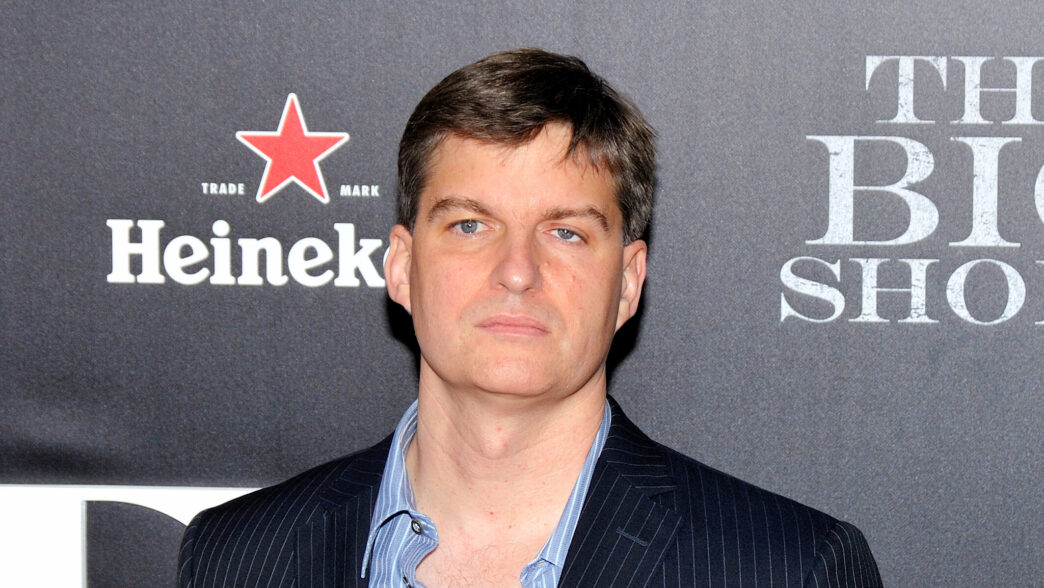
Michael Burry has shifted from hedge fund investing to long-form writing. The investor known for The Big Short has launched a new paywalled Substack called Cassandra Unchained. He says the blog is now his only focus and offers readers a front row seat to his market analysis, predictions, and views on bubbles. He frames it as a return to a familiar path, recalling the period when he wrote about value investing at night while working as a neurology resident at Stanford.
His first entries set the tone. One walks through his early years in the late nineties and early 2000s. The other takes direct aim at the current AI frenzy, which he describes as a glorious folly. He writes that the topic will require several posts to unpack. He challenges a common claim that separates the dot com bubble from today’s AI boom. Many people argue the companies of that era were unprofitable while today’s giants generate real money. Burry says that view misses the point.
He writes that the Nasdaq at the turn of the century was driven by large, profitable companies. He points to Microsoft, Intel, Dell, and Cisco, which were known as the four horsemen of that period. He argues the real problem back then was catastrophic overbuilding. Supply soared far beyond what demand could support. He then adds that the pattern today is not as different as many believe.
He calls out the five public horsemen of the current AI cycle. They include Microsoft, Google, Meta, Amazon, and Oracle. He also mentions a cluster of fast growing AI startups led by OpenAI. He suggests the real parallel to the dot com period sits at the center of the AI ecosystem. He reminds readers that Cisco fell seventy eight percent during the dot com crash. He says the modern equivalent is Nvidia.
Burry ends his post with a quote from Charlie Munger. The line says that anyone who keeps popping balloons will not be the most popular person in the room. He uses it to hint at the reactions his views may generate as he challenges the optimism around AI valuations.
He announced his blog on X, where he uses the name Cassandra. The reference comes from Greek mythology. Cassandra was the figure who could see the future but was doomed never to be believed. Warren Buffett once used the same comparison for Burry and John Paulson after they warned about the housing market before the financial crisis.
Burry recently closed Scion Asset Management to outside investors after terminating its SEC registration. He returned to X in late October after a long break and posted a cryptic message that questioned the strength of the AI boom. The line suggested that the only winning move might be to step aside.
Burry’s move into long-form writing signals a deeper shift in how he wants to engage with markets. Rather than placing trades or managing outside capital, he is choosing words as his primary instrument. The Substack format gives him space to slow down, build arguments, and revisit historical cycles without the pressure of quarterly performance or public positioning. For a figure long associated with contrarian bets, the medium fits the message.
The name Cassandra Unchained also hints at intent. Burry is not just offering commentary. He is positioning the blog as a warning system, one that challenges consensus before cracks become obvious. By removing himself from fund management, he can afford to be early again, even if that means being unpopular. The paywall suggests he is writing for readers who want depth over headlines, not quick takes or viral threads.
His critique of AI is also more nuanced than outright dismissal. He does not argue that AI lacks real value or that the technology will disappear. Instead, he focuses on capital allocation, incentives, and scale. He questions whether the massive infrastructure buildout, from data centers to chips, is running ahead of realistic demand. That distinction mirrors his past thinking, where timing and magnitude mattered more than whether an innovation was real.
For many readers, the timing of the blog adds to its intrigue. AI enthusiasm is near a peak, valuations are stretched, and dissenting voices are rare. Burry seems aware of this dynamic and leans into it. By publishing now, he is not predicting an immediate collapse, but he is documenting a case that can be judged later. As with his housing market calls, the record itself may be part of the point.
Whether Cassandra Unchained becomes influential or simply controversial remains to be seen. But Burry’s return to writing suggests he believes the most important battles are no longer fought only in markets. They are fought in ideas, narratives, and the willingness to question what everyone else accepts as inevitable.