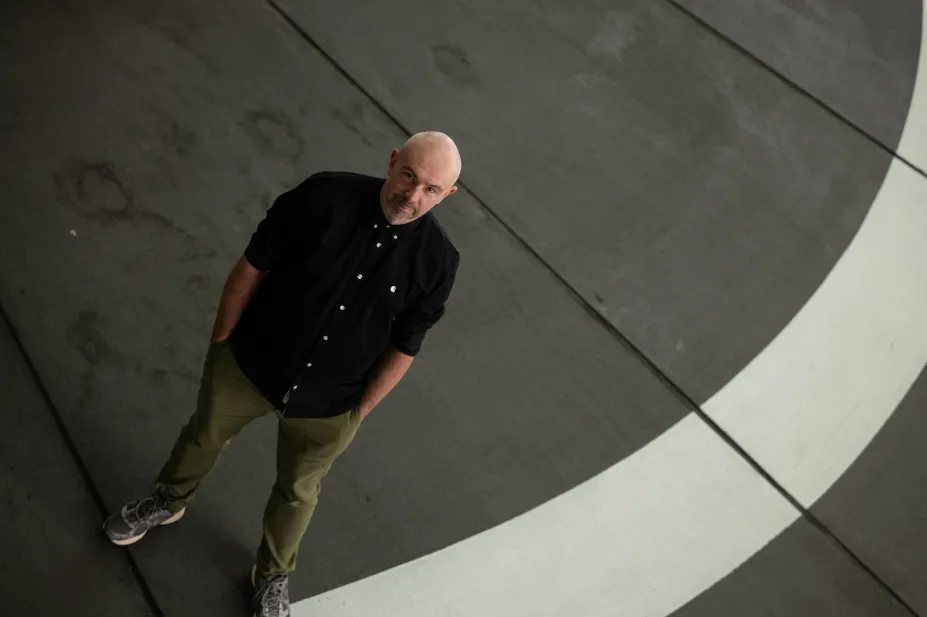
The Nordic startup scene keeps pulling in quiet believers. One of them is Neil Murray. This week, the solo venture capitalist announced the close of his third fund, a $6 million vehicle focused entirely on early-stage founders across the Nordic region.
The new fund, called Fund III, is managed through Murray’s Copenhagen-based firm, The Nordic Web Ventures. It will target founders building in robotics, AI-native software, deep tech, and select consumer categories. The goal is simple. Write the first institutional check and stay close from day one.
Murray has spent years doing exactly that. He is not chasing scale for scale’s sake. He is chasing alignment.
Fund III comes after nearly seven years of steady investing across Denmark, Sweden, Norway, and neighboring markets. During that time, Murray wrote the first checks into more than 50 startups. His portfolio includes Lovable, now a unicorn, as well as SafetyWing, the insurance platform built for remote workers. He has also seen exits, including Uizard, the UI design company acquired after rapid growth.
Murray describes his first two funds as experiments. They were small by design. The aim was not to build a massive asset base. The aim was to prove judgment.
Those early funds allowed him to test his thesis. Find exceptional Nordic founders early. Move fast. Stay involved. Avoid bureaucracy. Let performance drive returns.
Seven years later, the results gave him confidence to raise again.
Even so, he chose restraint.
Fund III attracted more than $20 million in investor interest. Murray declined most of it. He capped the fund at $6 million.
That decision was intentional.
He believes small funds create sharper incentives. With less pressure to deploy capital for fee generation, he can focus on outcomes. Staying small also keeps decision-making fast. As a solo GP, Murray does not want to wait while committees debate.
In his view, speed matters most at the earliest stages.
The fund will write checks of roughly $200,000. Murray plans to back between 30 and 35 companies. He is not trying to maximize ownership. He is trying to maximize founder quality.
He has been clear about that trade-off. He would rather invest in Tier 1 founders at modest ownership than force larger positions in weaker teams.
That mindset shapes how he builds his portfolio.
Fund III’s limited partners reflect Murray’s operator-first approach. Institutional backers include Allocater One, Pacenotes, and entrepreneur-investor Christoph Janz. The LP base also includes founders from Kahoot! and Pleo, alongside operators from Meta and Google.
For Murray, that matters more than branding.
Many founders backed in his first two funds also invested in Fund III. He sees that as one of the strongest signals of trust. It suggests founders believe in his long-term value, not just his capital.
He also noted that Fund I and Fund II have already returned more than half of the capital raised. That performance helped reinforce confidence heading into the new fund.
The timing aligns with a broader shift in Nordic venture momentum.
The Nordic ecosystem, spanning Denmark, Sweden, Norway, Finland, and Iceland, has grown into one of Europe’s most valuable startup regions. It is now valued at over $500 billion. In 2024 alone, startups in the region raised more than $8 billion in venture funding.
That growth has not come from hype cycles. It has come from consistency.
Murray argues the region benefits from a unique mix of engineering depth, strong computer science education, and real-world manufacturing expertise. When combined with a calm and methodical building culture, it creates strong conditions for applied AI.
That is especially true in robotics.
He sees growing opportunities in AI-powered robotics across industrial automation, healthcare systems, logistics networks, and even consumer products. The Nordics, he believes, are structurally well positioned to lead in those areas.
Consumer startups remain part of the thesis too. The region has a long history of global consumer brands. Murray believes that foundation still matters, especially as AI reshapes how consumer products are built and distributed.
While Fund III is tightly focused on the Nordics, Murray’s path into the ecosystem was not obvious.
He grew up in the UK. In 2013, he moved to Denmark without knowing anyone locally. At the time, he was working in digital products in London and had a growing interest in technology startups.
Once in Copenhagen, he noticed something unusual. Strong companies were being built, but few people were telling their stories outside the region.
That gap led him to launch The Nordic Web, a blog focused on documenting Nordic startup activity. He tracked investments, exits, and emerging founders. Over time, the site became a reference point for investors trying to understand the region.
Eventually, venture capitalists began asking Murray a different kind of question. Who is raising right now?
That moment changed his trajectory.
In 2017, he launched his first fund with $500,000. Soon after, he stopped writing The Nordic Web to focus fully on investing. The blog had served its purpose. It gave him insight, access, and credibility.
Fund III represents the natural extension of that journey.
Despite rising attention on Nordic startups, Murray rejects the idea that the region is experiencing a sudden breakout moment. He sees something slower and more durable.
In his view, the Nordics are compounding.
Talent depth continues to improve. Founder ambition keeps rising. The ecosystem itself is maturing. That combination creates a long runway for new companies, not a short-lived surge.
For Murray, this is not about riding a trend. It is about staying close to the builders shaping the next decade of Nordic innovation.
That philosophy explains why Fund III remains small. It also explains why Murray continues to invest alone.
Control, speed, and alignment matter more to him than scale.
And in a region known for quiet execution rather than loud promotion, that approach fits perfectly.