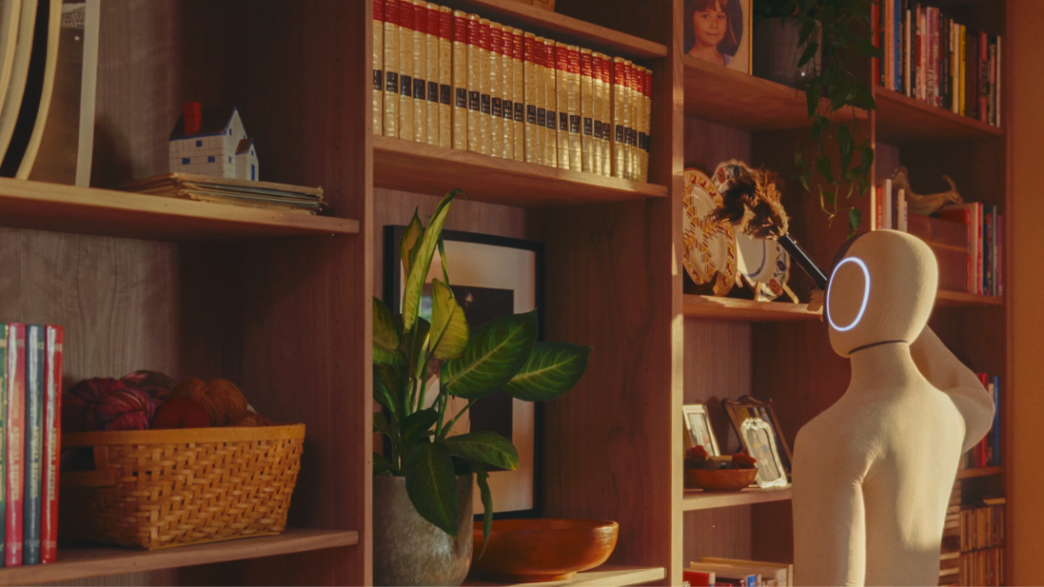
Neo humanoid maker 1X has unveiled a new artificial intelligence system designed to help robots understand and learn from the physical world. The company says the new release, called the 1X World Model, allows its Neo humanoid robot to interpret what it sees and translate that understanding into action. The announcement marks a major step in 1X’s effort to push humanoid robots out of controlled labs and into everyday environments.
The new world model is built to capture how objects move, interact, and respond to force in real-world settings. Rather than relying only on fixed training datasets, the system uses video inputs combined with natural language prompts. This approach allows Neo robots to observe actions and attempt new behaviors without being explicitly trained on each task in advance. According to 1X, this helps close the gap between perception and physical reasoning, a long-standing challenge in robotics.
At the center of the system is the idea that robots should learn in ways closer to how humans do. Instead of memorizing rigid instructions, Neo can watch video demonstrations and infer what actions might be required. When paired with a prompt, the robot can then attempt to replicate or adapt those actions in a physical space. This gives Neo the ability to try tasks it has never formally encountered before, even if success is not guaranteed.
The release of the world model comes as 1X prepares for a much bigger milestone. The company is gearing up to introduce Neo humanoid robots into homes. Preorders for Neo opened in October, signaling 1X’s ambition to move beyond industrial or research-focused deployments. While the company has not shared exact shipping dates, it confirmed that early demand exceeded expectations, pointing to growing interest in general-purpose humanoid robots.
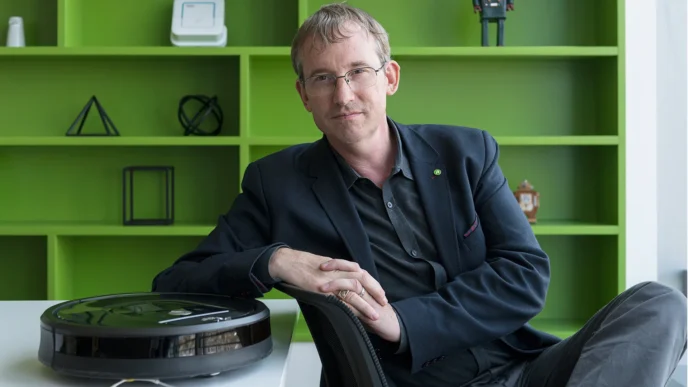
Bernt Børnich described the world model as the result of years of development aimed at making Neo both physically and cognitively closer to humans. He said the system allows Neo to learn from internet-scale video and apply that knowledge directly to the real world. According to Børnich, the ability to turn prompts into actions without prior examples marks the beginning of Neo’s capacity to teach itself new skills.
Those claims highlight the excitement around the technology, but they also reveal its current limits. While the world model enables Neo to attempt a wide range of actions, it does not instantly grant mastery over complex behaviors. You cannot simply ask Neo to perform a highly specialized task, like driving a car, and expect perfect execution. Instead, the model allows the robot to explore how an action might be performed and learn through trial and feedback.
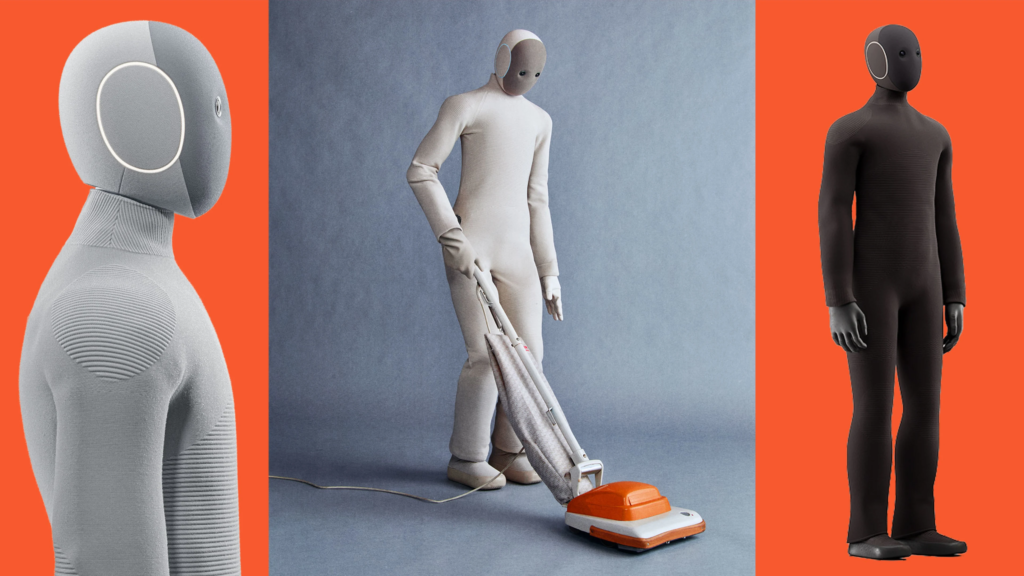
A spokesperson for 1X clarified that the world model’s strength lies in enabling attempts rather than guaranteed success. So far, the tasks Neo has demonstrated using the system remain basic. These include removing an air fryer basket, placing bread into a toaster, and performing simple social gestures like a high five. While modest, these examples show the robot responding to new prompts by reasoning through physical interactions.
These early demonstrations matter because they reflect a shift in how robots acquire skills. Traditional robots often rely on carefully scripted routines and structured environments. Even small changes can cause failure. By contrast, the world model lets Neo reason about objects and movements in a more flexible way. This adaptability is essential for robots intended to operate in homes, where environments are unpredictable and constantly changing.
The model also offers benefits beyond immediate task performance. By observing how Neo reacts to prompts, 1X gains insight into the robot’s internal decision-making process. This visibility allows engineers to see where the robot struggles, how it interprets instructions, and which physical assumptions it makes. That data can then be used to refine future training and improve safety and reliability.
In practical terms, the world model acts as both a learning engine and a diagnostic tool. When Neo attempts a task, the system reveals how the robot understands the environment. If the robot misjudges an object’s weight or movement, those errors become valuable signals. Over time, this feedback loop could help Neo build more accurate mental models of the world it operates in.
The timing of the release is significant. Humanoid robotics has entered a new phase, with multiple companies racing to develop general-purpose robots powered by advanced AI. Instead of focusing on narrow industrial tasks, these systems aim to assist with everyday activities. For 1X, the world model represents a foundational layer that supports this broader vision.
What sets the 1X approach apart is its emphasis on learning from visual data at scale. Video-based learning allows the system to draw from a vast range of human activities already available online. While not every video translates cleanly into robotic action, the sheer volume of data provides rich context about how tasks are performed in real environments.
Still, the company is careful to frame the current capabilities as an early step rather than a finished solution. Basic household tasks may seem trivial to humans, but they require complex coordination of perception, balance, and fine motor control for robots. Each successful demonstration builds confidence that more advanced behaviors are achievable over time.
As Neo moves closer to home deployment, questions around safety, reliability, and trust will become increasingly important. A robot that can learn from prompts must also know when not to act. Understanding the boundaries of its own capabilities is just as critical as expanding them. The insights provided by the world model could play a key role in defining those limits.
The broader implication of the 1X World Model is that humanoid robots may soon shift from being pre-programmed machines to adaptive learners. Instead of waiting for engineers to define every action, robots like Neo could gradually expand their skill sets through observation and interaction. That shift could accelerate progress across the entire field of robotics.
For now, the achievements remain incremental. Neo is not yet a fully autonomous household helper capable of handling complex chores without guidance. However, the ability to attempt unfamiliar tasks and learn from them represents meaningful progress. Each small success lays the groundwork for more sophisticated behavior in the future.
By releasing its world model ahead of large-scale home deployment, 1X is signaling that intelligence, not just hardware, will define the next generation of humanoid robots. If the system continues to improve, Neo could evolve from a carefully guided assistant into a more independent presence in everyday life.
The unveiling of the 1X World Model does not mark the end of development. Instead, it opens a new chapter in which robots learn by seeing, trying, and adapting. For 1X, this approach could determine whether Neo becomes a practical household companion or remains a promising but limited experiment.