Nuclear startups are staging a serious comeback as investors pour fresh capital into a sector many once considered stalled. Across late 2025, emerging nuclear companies raised about $1.1 billion, driven by confidence that small modular reactors can fix problems that crippled traditional nuclear projects. Rising electricity demand, energy security concerns, and climate pressure have pushed nuclear power back into the spotlight. As a result, startups are racing to redefine how reactors are built, financed, and deployed.
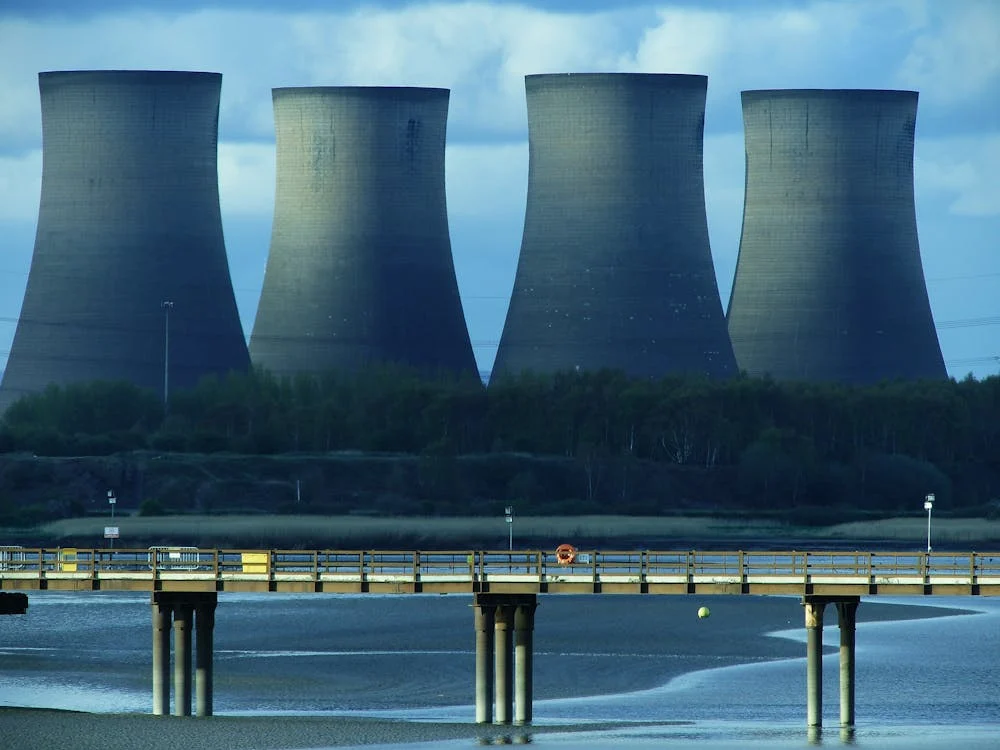
Conventional nuclear plants remain engineering marvels, yet they also represent cautionary tales. Recent U.S. projects like Vogtle Units 3 and 4 in Georgia delivered enormous generating capacity, but only after years of delays and cost overruns exceeding $20 billion. Those challenges damaged investor trust and slowed new construction nationwide. Smaller reactors promise a different path by reducing complexity and allowing capacity to scale in stages rather than through single massive builds.
The core idea behind small modular reactors is simple but ambitious. Instead of constructing one enormous facility, companies aim to manufacture compact reactor units in factories. Utilities could then deploy these units incrementally, adding more reactors as demand grows. Supporters argue that standardized designs and repeatable processes can unlock the same learning curves that transformed industries like aerospace and automotive manufacturing.
That optimism, however, rests on an assumption still under scrutiny. Experts continue to debate how much cost reduction mass production can realistically deliver in nuclear energy. While learning curves are real, they rarely materialize quickly. Startups are betting that even modest gains will be enough to make smaller reactors commercially viable compared to traditional plants and competing energy sources.
Manufacturing remains the hardest test. Even companies with deep experience struggle to scale production smoothly. Electric vehicle makers offer a clear example. Despite operating in a mature industrial ecosystem, Tesla faced major hurdles producing the Model 3 at scale. Nuclear startups must confront similar challenges without the benefit of a robust domestic nuclear supply chain.
Supply chain gaps are especially acute in the United States. Many specialized materials and components required for nuclear construction are no longer produced domestically. According to Milo Werner, a general partner at DCVC, the country has forgotten how to make several critical nuclear inputs and now relies heavily on overseas suppliers. That dependence introduces delays, cost volatility, and geopolitical risk.
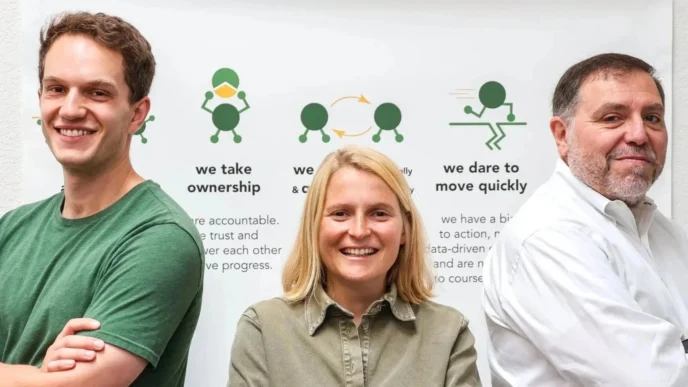
Werner brings rare firsthand manufacturing insight. Before entering venture capital, she led new product introductions at Tesla and previously launched factories in China while working at Fitbit. Today, alongside her investment role, she co-founded the NextGen Industry Group to accelerate adoption of advanced manufacturing technologies across U.S. industry.
From her perspective, manufacturers face two fundamental constraints. The first is capital. Factories are expensive, and early-stage companies often struggle to finance them. Nuclear startups, however, are currently flush with funding. Investor enthusiasm has temporarily removed capital as the main bottleneck, giving companies room to experiment and build infrastructure.
The second constraint is human capital, and it may prove far more difficult to solve. The United States has not built large-scale industrial facilities consistently for decades. As a result, much of the institutional knowledge needed to design, construct, and operate factories has faded. Werner compares the situation to trying to run a marathon after years of inactivity. The skills exist, but not in sufficient quantity.
This shortage extends far beyond factory floor workers. Experienced supervisors, plant managers, financial leaders, and even board members with manufacturing expertise are in limited supply. Nuclear projects demand coordination across all these roles, and gaps at any level can derail timelines and budgets. Without a deep bench of seasoned professionals, scaling production becomes risky.
There are signs of progress. Many startups are choosing to build early manufacturing operations close to their engineering teams. That proximity allows rapid feedback loops between design and production, speeding improvements and reducing costly mistakes. Over time, this approach may help rebuild domestic manufacturing capability while keeping critical knowledge in-house.
Modularity plays a central role in that strategy. By breaking reactors into standardized components, companies can start with small production runs and gradually scale up. Early data from these runs helps investors assess whether learning curves are materializing. Clear evidence of incremental improvement can unlock additional funding and long-term confidence.
Still, patience is essential. Manufacturing efficiencies rarely appear overnight. Cost reductions tied to learning and repetition often take many years to fully emerge. Forecasts frequently underestimate how long the process will take, and nuclear startups are unlikely to be exceptions. Even under ideal conditions, meaningful gains may require a decade of steady execution.
Despite those hurdles, momentum is building. Growing power demand from data centers, electrification, and industrial reshoring has renewed interest in reliable baseload energy. Small modular reactors sit at the intersection of that demand and investor appetite for transformative infrastructure. Whether they can deliver on their promise will depend less on reactor physics and more on disciplined manufacturing, workforce development, and long-term commitment.
The nuclear renaissance underway is real, but it remains fragile. Capital alone cannot rebuild an industry. Success will hinge on whether startups can relearn the industrial skills the country once mastered and apply them at scale. If they do, small reactors could reshape the energy landscape for decades. If not, history may repeat itself at a smaller, but still costly, scale.