Palo Alto Networks is making another bold move with a new acquisition that strengthens its position in AI-driven infrastructure. The company has agreed to acquire Chronosphere in a $3.35 billion deal, marking one of its largest steps into the observability market.
Chronosphere built its platform to help engineering teams cut through noisy data and quickly identify the metrics that matter most. It gives companies visibility across infrastructure, applications, and business performance. As AI workloads grow, that kind of clarity is becoming essential for preventing downtime.
Palo Alto Networks said Chronosphere will be combined with its AgentiX technology. Together, they plan to deploy AI agents across Chronosphere’s massive datasets to detect issues in real time, investigate the root cause, and trigger automated fixes. The company believes this brings it closer to a future of fully autonomous operations.
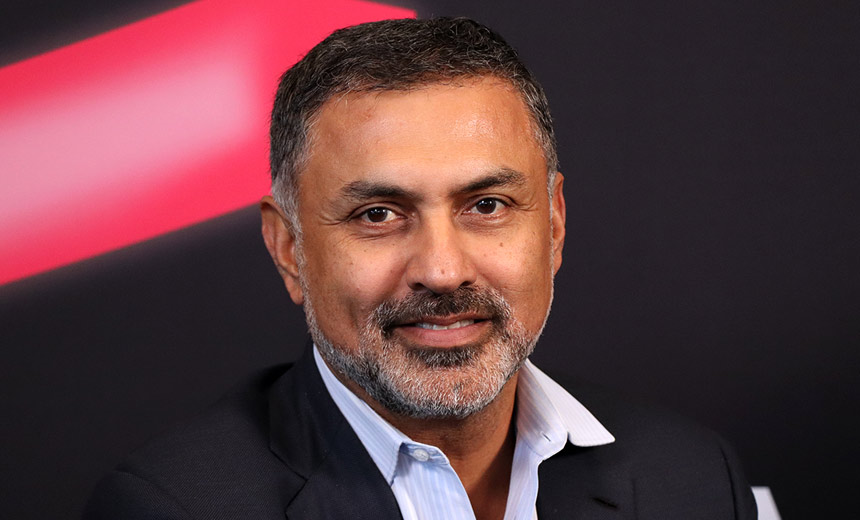
CEO Nikesh Arora said modern AI data centers depend on constant uptime. He noted that the industry now needs real-time observability that works at scale and stays affordable. Chronosphere’s approach, he explained, fits right into that mission.
The agreement calls for Palo Alto Networks to pay $3.35 billion in cash and replacement equity, with standard adjustments. Chronosphere enters the deal with strong momentum, reporting over $160 million in ARR as of September 2025.
This is part of a much bigger acquisition streak. Palo Alto Networks recently announced a massive $25 billion deal for CyberArk, and earlier this year, it signed an agreement to buy Protect AI for an estimated $650–700 million. The company is quickly becoming a dominant force across cybersecurity, observability, and AI operations.
Industry analysts say the acquisition reflects a broader shift. As companies adopt more distributed systems and AI-heavy architectures, observability has become essential. Legacy monitoring tools cannot keep up with real-time data spikes, and teams need platforms that highlight insights instead of overwhelming them.
Chronosphere was built for that challenge. It helps teams control telemetry costs and cut down on manual work. By pairing its data engine with Palo Alto’s agentic AI, the combined platform aims to move beyond monitoring and deliver automatic detection and remediation.
The deal also signals more consolidation ahead in the observability space. Many independent platforms face growing costs and more competition. By joining Palo Alto Networks, Chronosphere gains scale, reach, and an established global customer base.
For Palo Alto Networks, the acquisition pushes it deeper into the heart of AI infrastructure. By integrating observability with intelligent agents, the company wants to offer systems that can identify problems early, repair themselves, and keep critical services running without interruption.
This is the direction many enterprises are moving toward. As AI becomes the engine of modern business, the pressure to maintain uptime increases. Palo Alto Networks is betting that companies will want a single platform capable of watching everything and fixing issues automatically.
Another strategic angle is how this deal reshapes Palo Alto Networks’ competitive positioning. By pulling observability deeper into its security and AI operations stack, the company is blurring the line between monitoring and protection. In AI-heavy environments, performance issues and security incidents often look similar in the early stages. A spike in latency or abnormal resource use can signal either a system failure or an attack. Palo Alto Networks is positioning itself to catch both through a single lens.
There is also a strong platform play behind the move. Enterprises are increasingly frustrated with managing dozens of disconnected tools across security, infrastructure, and operations. Each tool generates alerts, dashboards, and costs. By folding Chronosphere into its broader ecosystem, Palo Alto Networks is offering a more unified experience, one where observability data feeds directly into automated response and policy decisions driven by AI agents.
For Chronosphere’s customers, the acquisition could unlock new capabilities faster than going it alone. Many teams already rely on the platform to keep telemetry costs under control as data volumes explode. With Palo Alto’s resources, Chronosphere can accelerate product development and support much larger deployments, especially in global enterprises running complex AI workloads.
The timing also matters. AI infrastructure spending is still climbing, and data center complexity is increasing. As models grow larger and inference moves closer to real-time applications, the tolerance for outages shrinks. Companies cannot afford minutes of downtime, let alone hours. Observability that can predict failure and act automatically is becoming a board-level concern, not just an engineering one.
Taken together, the Chronosphere acquisition reinforces Palo Alto Networks’ long-term bet. The future of infrastructure is autonomous, AI-driven, and deeply interconnected. Security, performance, and reliability are no longer separate problems. By bringing observability into the core of its platform, Palo Alto Networks is signaling that the next generation of enterprise systems will not just be monitored, but continuously understood and self-healed.