The World super app is officially here, and it marks the most ambitious update yet for Sam Altman’s biometric identity project. World, the startup-backed platform built to prove that users are real humans, has rolled out a redesigned app that blends encrypted messaging, crypto payments, and digital identity into a single experience.
The update transforms World from a niche identity wallet into something closer to a consumer-facing super app. It brings together private communication, peer-to-peer payments, and financial tools under one interface. The goal is simple but bold. Make digital interactions safer in a world flooded with AI-generated accounts and bots.
World was created in 2019 by Tools for Humanity and publicly launched its app in 2023. From the start, the project focused on one core idea. The internet needs a reliable way to tell humans apart from machines without sacrificing privacy. As AI systems grow more convincing, that problem has only become more urgent.
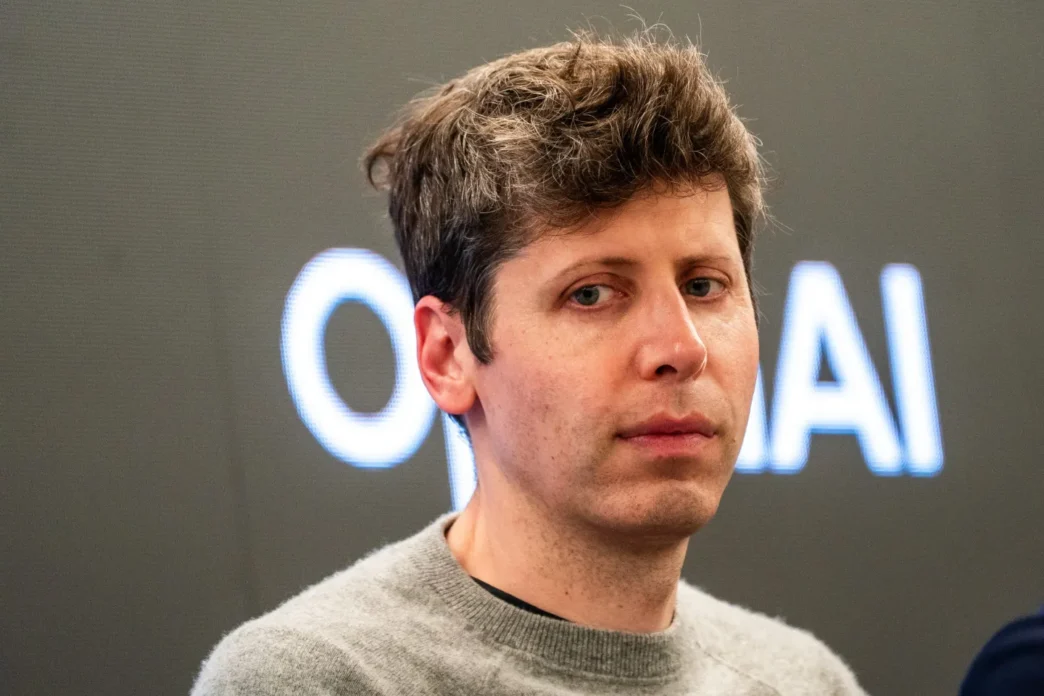
At a small event in San Francisco, Sam Altman and World CEO Alex Blania briefly introduced the new version before handing the stage to the product team. Developers internally describe the release as the World super app because it now supports social interaction, payments, and identity verification in one place.
Altman explained that the idea for World came from long conversations about economics in a post-AI future. If machines can replicate human behavior at scale, digital systems need a new foundation. That foundation, according to World, is proof of human identity built with privacy in mind. Altman has repeatedly said that identifying unique people without exposing personal data is one of the hardest problems in technology today.
One of the headline features in the World super app is World Chat. This new messaging tool uses end-to-end encryption and is designed to offer privacy levels comparable to Signal. Messages stay private, and World itself cannot read conversations.
What sets World Chat apart is how it connects identity to communication. Conversations display color-coded speech bubbles that show whether the person on the other end has been verified through World’s system. The visual signal is subtle but intentional. It gives users immediate context about who they are talking to without forcing verification on everyone.
The feature aims to encourage trust while avoiding heavy-handed requirements. Users can still chat with unverified accounts, but the app makes the difference clear. World believes this transparency will push more people to verify voluntarily, especially as online impersonation becomes more common.
World Chat first launched in beta earlier this year. The new release expands it into a full-featured messenger designed to feel familiar to users of WhatsApp or Telegram. According to World’s product team, that familiarity was a deliberate choice. Adoption depends on comfort, not novelty.
Crypto payments form the second major pillar of the World super app. The app has long functioned as a digital wallet, but the new update turns it into a more complete financial hub. Users can now send and request cryptocurrency in a way that closely resembles popular peer-to-peer apps like Venmo.
The update also introduces virtual bank accounts. With them, users can receive paychecks directly into the World app or deposit funds from traditional bank accounts. Those funds can then be converted into crypto inside the app. Importantly, users do not need to be verified through World’s biometric system to use these payment features.
That decision reflects a broader strategy. World wants to lower the barrier to entry and let users engage with parts of the ecosystem before committing to identity verification. Payments and chat act as entry points, while verification remains optional but incentivized.
Tiago Sada, World’s chief product officer, said the addition of chat was driven by user feedback. Many early adopters wanted the app to feel more social and less transactional. Chat adds daily utility and keeps users engaged beyond identity checks and wallet balances.
Sada described World Chat as a technical challenge that took significant effort to get right. The team wanted the usability of mainstream messengers paired with the privacy standards of the most secure platforms. That balance, he said, was critical to trust.
At the center of the World ecosystem remains its controversial verification process. Users who want a verified World ID must scan their eyes using a device called the Orb. The Orb converts an iris scan into a unique encrypted code that proves a person is human without storing biometric images.
That process has drawn criticism and skepticism since launch. Standing in line to have your eyes scanned by a metallic device is not an easy sell. Adoption reflects that friction. While Altman has said he hopes to eventually verify a billion people, Tools for Humanity reports that fewer than 20 million have been scanned so far.
The company is aware of the challenge and has already started adjusting its approach. Earlier this year, it introduced Orb Minis. These handheld devices allow users to scan their eyes at home, removing the need to visit a physical location.
Blania has previously suggested that Orb Minis could evolve into mobile point-of-sale devices or that the underlying sensor technology could be licensed to hardware makers. If World succeeds in embedding verification into everyday devices, the scale problem becomes much easier to solve.
The expanded features in the World super app signal a clear shift in strategy. Instead of leading with verification alone, World is building reasons for people to stay. Messaging, payments, and financial tools create habitual use. Verification then becomes a layer that adds value rather than a gate that blocks access.
This approach mirrors how other super apps grew in emerging markets. Utility came first. Trust followed. World is betting that the same model can work globally, even with something as sensitive as biometric identity.
Whether users embrace that vision remains an open question. Privacy concerns have not disappeared, and regulators continue to watch biometric systems closely. Still, the World super app shows how seriously the company is taking adoption challenges.
By combining crypto payments, encrypted chat, and proof of human identity, World is no longer just an experiment. It is positioning itself as infrastructure for a future internet shaped by AI.